
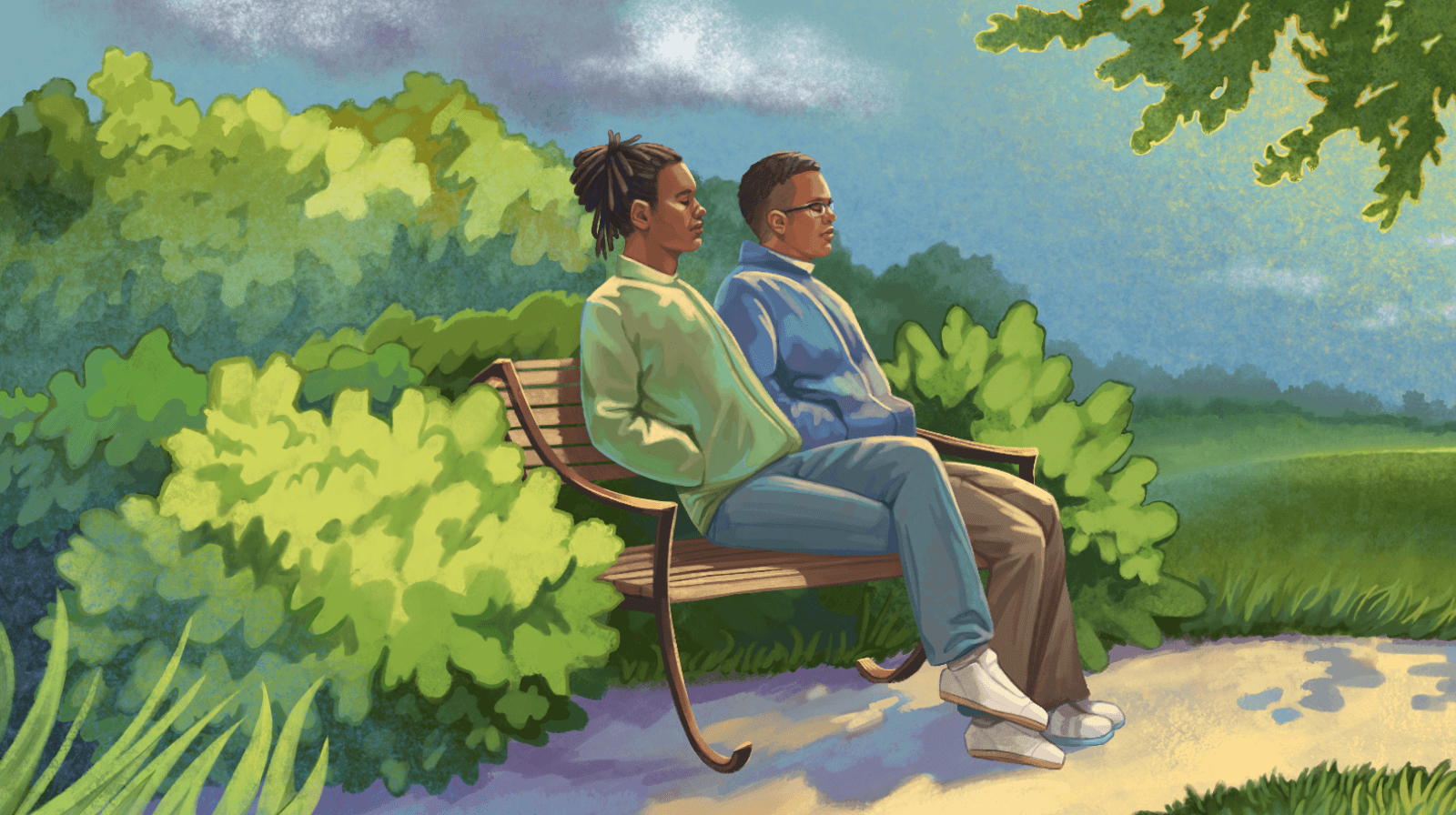
When it comes to suicide prevention, deep expertise lies with those who’ve lived through an attempt or supported someone who has.
Madi Sutton, Allison Dunning, and Kelly Brownbill have thought back to the conversations that helped to save their lives, or the life of a loved one, and they shed light on what made these conversations safe and meaningful for them.
More than scratching the surface

Allison Dunning
Are you thinking of suicide? Do you have a plan? Do you have means?
We’ve been taught these are the questions to ask when someone discloses suicidal thoughts. But Allison Dunning, executive director of Peer Support Canada, says they barely scratch the surface.
“These yes or no questions play into the binary idea that you’re going to imminently harm yourself, or you aren’t,” says Allison. “The reality is more often a shade of grey.”
Having deep experience with peer support, she describes suicidality as a low hum running in the background of many people’s minds — an escape hatch they might never use.
“As a society, we’re uncomfortable talking about death and dying, so people push those feelings down until they become dangerous,” says Allison.
When pain becomes unbearable

Madi Sutton
That’s what happened to Madi Sutton, who attempted suicide at age 16.
“I was in so much pain it hurt to breathe,” she recalls now, more than 10 years later, having trained to become a health care provider, as a way to honour her experience.
“I woke up in the hospital with a back injury,” says Madi. “And I learned later the psychiatrist in charge of my care wrote off any possibility of recovery.”
Her parents rejected that bleak prognosis. She credits their steadfastness and the kindness of the nurses who cared for her with saving her life. “In my darkest moments, a nurse would come and sit with me, and just their presence would affirm that I was worthy of healing,” says Madi.
Meanwhile, her parents held hope when she couldn’t. Her father would say, “I know you don’t have hope, but I do, and I’ll hold it for you.”
The language of safety
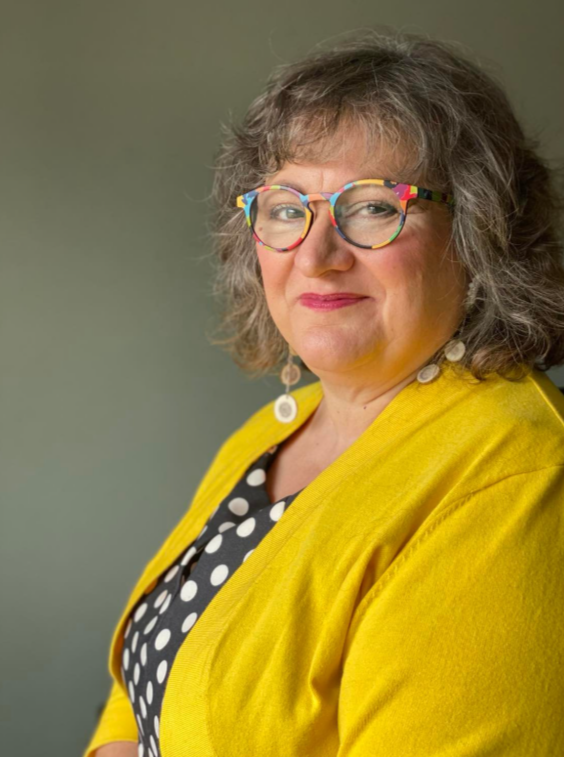
Kelly Brownbill
This kind of ferocious, attentive care is something Kelly Brownbill, a teacher of First Nations’ tradition and culture, knows first-hand. When her daughter Ziigwen’s suicidality became acute, Kelly spent three years with a single imperative: keeping her daughter alive.
Over time, they developed a shorthand. Instead of asking, “Are you suicidal?” Kelly would ask Ziigwen, “Are you safe?” It gave them a shared, precise understanding: Kelly was asking not whether her daughter was well, but whether she had a plan to harm herself imminently.
“Sometimes she’d start venting, and she’d see my eyes widen with fear, so she’d hold up her hand and say, ‘Mom, I’m safe,’” Kelly recalls.
Kelly also gauged her daughter’s capacity with another simple question: “Do you have any spoons?” It became code for “Is this asking too much of yourself?” It gave her daughter permission to tap out of tasks that would deplete her dwindling reserves.
This shared language helped create safety between them. If Ziigwen said she didn’t feel safe, Kelly knew how to respond.
“You can’t respond with guilt or recrimination. You say, ‘Thank you for telling me that. I am here. I am going to keep you safe,’” says Kelly.
The power of curiosity
When Madi was at her lowest, her family simply asked, “What do you need right now?” Sometimes that was company while watching a movie or sitting together in silence.
“It gave me permission to ask for helpful support, rather than letting others assume what I needed,” she says.
According to Allison, these responses are the opposite of what usually happens. More often, people are dismissive, offering a pat on the shoulder with reassurance that everything will be fine. “I shut down immediately on hearing those words,” says Allison, who has herself experienced suicidality.
Sometimes, people hit the alarm button, calling in reinforcements before they’re required. “It’s happened to me. I’ve been formed. I’ve been sectioned,” says Allison, who suggests trying a very simple intervention first.
“Ask someone if you can make them a cup of tea, get them a sandwich, if they’d like to go for walk,” she says. “Because of the fluid nature of suicidal thoughts, a person can feel very differently after they’ve eaten or done some movement.” While Allison concedes these measures won’t solve the more deeply rooted problems, she emphasizes that intense feelings of distress can sometimes be lessened once basic needs have been met and people have had space to breathe and move.
Above all, Allison advises responding with compassion and curiosity. “Someone has just told you they are suffering. Try sitting with them in that pain.”
Questions like What have you done when you’ve felt like this in the past? or What’s helpful to you in moments like this? create space for exploration.
“You’re not trying to fix the person or convince them they’re wrong to feel this way,” Allison explains. “You’re just present and curious.”
Why intention matters
But curiosity requires time, which is a scarce resource in clinical settings.
“An emergency room is, by nature, not designed to deal with chronic or ongoing health issues,” Allison points out.
Even in primary care, health care providers operate under real constraints: time is limited; capacity is stretched. But meaningful support doesn’t require infinite hours. “It requires intention,” says Madi.
When someone discloses suicidal thoughts, Madi, Allison, and Kelly agree the first response should be unequivocal. Thank you for telling me. Thank you for trusting me.
“That immediately calms the flood of anxiety after a disclosure,” Madi says.
From there comes honesty about limitations. “As a health care provider, be transparent about time constraints,” says Madi, who suggests responding with I have 10 minutes, but you are worthy of as much time as you need or I wish I could sit with you in your pain, but what I can do is tell you there are resources for you, because you are worthy of help and support.
In a busy health care setting, Allison affirms that a referral to peer support can be a meaningful way to offer a low-intensity intervention, without dismissing someone’s need to be heard.
Reframing also matters. Routine screening questions — Do you smoke? Do you drink alcohol? — can feel judgmental to someone already drowning in shame. Madi suggests providing context for the questions: “Explain, these aren’t questions to judge your choices. These are questions to help me ensure the right treatments.”
People at their lowest often feel unworthy — of care, compassion, and kindness.
“I was looking for a signal to confirm the worst thoughts about myself,” says Madi. That could be a sigh, an eye roll, a tightening of the shoulders.
“Small, often-unintentional signals can do untold harm.”
On the flip side, nonjudgmental body language, such as leaning slightly forward, keeping arms and legs uncrossed, making eye contact, and facing someone directly, can signal safety.
The bigger picture
While compassion between individuals, whether within a family or in a health care setting, is important, the conditions for safety extend beyond a single household or interaction.
Allison is acutely aware of how privilege shapes care. “As a white, cis-gender woman, I may be extended grace that others in the same situation wouldn’t be,” she acknowledges.
When we talk about suicide prevention, Allison says, we need to consider the foundations. “Housing, food security, libraries, peer support, anti-racism — these are legs of the stool. We can’t ask someone to be well if they are hungry and without a home.”
For Kelly, this structural view is inseparable from culture. Safety for Indigenous people means something specific: safety in communities often too small for privacy, safety in a broader world where racism and historical trauma still echo, and safety in their own bodies.
Health care providers and support systems, Kelly believes, need to ask each person this question: What would make you feel safe? The answer may be different for everyone. But that question, she says, is at the heart of what will ultimately change the narrative around suicide prevention.
Changing the narrative
What does a real shift in the narrative look like?
For Allison, it starts with curiosity before crisis hits. Questions like How do you think we got here? help us understand not just where someone is now, but how they arrived there. That’s where prevention actually begins.
For Kelly, the shift is from prevention to life promotion, drawing on cultural strengths and helping people find power and resilience in their heritage. “Suicide prevention is one side of the coin,” says Kelly. “But life promotion is the other, and it’s equally important.”
For Madi, it means rejecting the idea that attempting suicide is cowardice, selfishness, or a moral failing. “When I tried to take my own life, it was at a moment when the pain was not something I could endure any longer,” she says.
She survived. She healed. And she returned to health care because living through that pain taught her something textbooks cannot.
“When you have lived through this very visceral kind of pain, you are perhaps more attuned to it than others. And knowing what that pain does to a person gives insights into how to best respond when you encounter it,” Madi reflects.
When living through those moments of pain, the question Kelly always comes back to is the simplest one: What do you need to feel safe?
And then we listen.
