
When a Deaf person in Canada experiences a mental health crisis in a mainstream setting, the immediate barrier they face isn’t their distress — it is the hearing world’s inability to connect with and understand them. The problems are both immediate and systemic. They show up during a crisis response, but also in the hearing-centric structures and institutions that surround mental health care.
As a hearing person, the default would be a crisis response that relies almost entirely on spoken words. Even in a health-care setting, professionals may rely on exhausting alternatives, like asking a distressed person to lip-read or to scribble their deepest trauma onto a clipboard. This approach is more than inefficient; it highlights a stark reality: standard mental health frameworks are fundamentally unequipped to support the distinct cultural and linguistic identity of the Deaf community.
Psychological distress rarely stems from deafness itself. Instead, it is driven by systemic barriers, early language deprivation, and the friction of a world not built for visual communication. To truly centre Deaf experiences, frameworks like Mental Health First Aid must evolve. By framing American Sign Language (ASL) and cultural competency as non-negotiable foundations of psychological safety, we can build a crisis response model that genuinely understands Deaf people. In this model, both Deaf and hearing first aiders have the cultural humility to offer meaningful, accessible care.
The Deaf community comprises about 357,000 people in Canada who identify as part of a distinct and rich linguistic and cultural group. For many Deaf people, ASL or Langue des signes Québécoise (LSQ) is their first language, where written English or French may be an additional language. These sign languages are not just interpretations of English or French. They are complete, complex languages with their own syntax, grammar and idioms. And few people in the health care system can communicate in them.
The problem is not that Deaf people need help communicating. It is that the systems built to offer crisis and mental health care do not understand how a person processes pain or establishes safety in sign language. To truly centre Deaf experiences, the hearing community, including first aiders and health-care providers, must look beyond medical accommodations and actively champion American Sign Language (ASL) and/or Langue des signes Québecoise (LSQ) and Deaf-centric ways of communicating as non-negotiable pillars of psychological safety and equitable care.
However, the problem goes beyond communication. Deaf people in Canada are more likely to report having mental health problems such as depression. This is not because of anything intrinsic to deafness itself. The disconnect seems to lie in accessing and navigating health-care systems, particularly mental health care. Among people in Canada with a hearing disability, 81 per cent reported barriers to accessibility, including when using social media or video conferencing services. Deaf people in Canada identify mistrust of health-care providers and communication problems as the two biggest challenges they face in mental health care. Just navigating a world made for hearing people is a significant stressor for many Deaf people.
Many Deaf people grew up in hearing families and communities without early access to a fully accessible language during critical developmental periods. This is called early language deprivation, and it is about more than communication. Early language deprivation has chronic effects on cognitive development, mental health, education, and social inclusion. Deaf culture isn’t just hearing culture translated into sign language. It is a distinct culture with its own language, values, traditions, norms and identity.
Not all Deaf people in Canada identify with Deaf culture. Not all Deaf people in Canada communicate using ASL or LSQ. Some choose to communicate with hearing people using assistive technologies, and some do not. There is no one “right” way to live as a Deaf person. The Deaf community is complex and multi-faceted, shaped by personal and societal histories. Its members have agency over how they choose to live in the world. Then add the nearly 1.6 million people in Canada with a hearing disability, including deafness. They may not share the histories of people born Deaf. But they do share in some of the systemic inequities that cause the health-care system to fail them — and the gap widens.
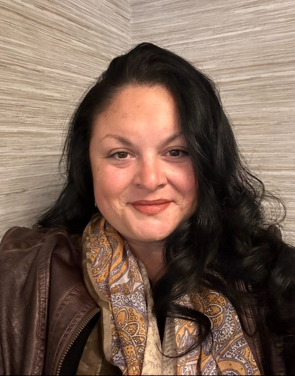
Meghan Johnson
Canadian Hearing Services recognizes the gap and has stepped in to bridge it. Meghan Johnson, the Associate Director of Mental Health and National Expansion at the Canadian Hearing Services, sat down to speak with me about the programs and resources they offer. She named the barriers Deaf people face with mental health concerns: limited access, lack of awareness, and communication barriers. She noted that the Canadian Hearing Services offers the Connect Mental Health Counselling service as well as interpretation services for the Deaf community. Canadian Hearing Services provides trusted solutions for Deaf people in Canada and the people who support them,” she says.
Johnson, a clinician who is herself a Deaf person, explains that living with a mental illness as a Deaf person means navigating more than the illness itself. It also means navigating language and cultural competency. “We need to facilitate communication in mental health care, and communication is different for everyone.”
One of the strengths that Deaf people in Canada identify is the Deaf community itself. The support of other Deaf people, their allies, and advocates is critical for many. This is where community-driven, co-created mental health programs can step in and fill the gap. If Deaf people are more comfortable seeking help from members of their own community, let’s equip that community to respond with evidence-based, practical interventions. “Canadian Hearing Services provides expertise in Deaf mental health services,” says Johnson, “and we were excited to collaborate with Opening Minds to provide the first and only Deaf-centric Mental Health First Aid program in Canada.”
Mental Health First Aid (MHFA) is an internationally renowned evidence-based training program that helps people recognize mental health problems, respond supportively, and apply practical actions until professional help is accessed. Canadian Hearing Services partnered with Opening Minds, which the Mental Health Commission of Canada created to “provide evidence-based training and tools that help people talk about mental health, change negative attitudes, and build more mentally healthy communities and workplaces.” Together, they have launched an MHFA course designed for — and crucially with — the Deaf community. The course draws on Deaf lived experience, accessibility considerations, and Deaf-specific mental health knowledge to make the learning experience safe, relevant, and culturally grounded.
The training combines pre-course activities with two days of instructor-led, online learning. “This program is offered in ASL and in English and addresses critical gaps in awareness and confidence in responding to mental health and substance use challenges,” says Johnson. MHFA for the Deaf community empowers members of the Deaf community – as well as hearing family members, friends, community service providers, educators and mental health professionals – with the knowledge and resources they need to respond to the mental health and substance use concerns of Deaf people in Canada.
We still need more culturally competent mental health care workers and health-care workers who speak ASL and LSQ. We need to fund and enable the pipelines that train Deaf and hard of hearing people to provide care. We still need better, easier access to technologies and resources that can accurately enable nuanced communication between hearing clinicians and the Deaf people they care for. We need to support Canadian Hearing Services as it works to remove the barriers that keep Deaf people from accessing health care, particularly mental health care.
But in the meantime, Canadian Hearing Services and the Commission are working with the Deaf community to build its own capacity to support people with mental health and substance use concerns through MHFA for the Deaf community.
For more information on Mental Health First Aid for the Deaf Community, contact MHFAD@chs.ca, or visit https://www.chs.ca/mental-health-first-aid-deaf-community
Resources, sources, and documents
CMAJ – Deaf culture and health care
Canadian Family Physician – Health profile of deaf Canadians
Sunnybrook Research Institute – highlights barriers to health care access for Deaf Ontarians
