
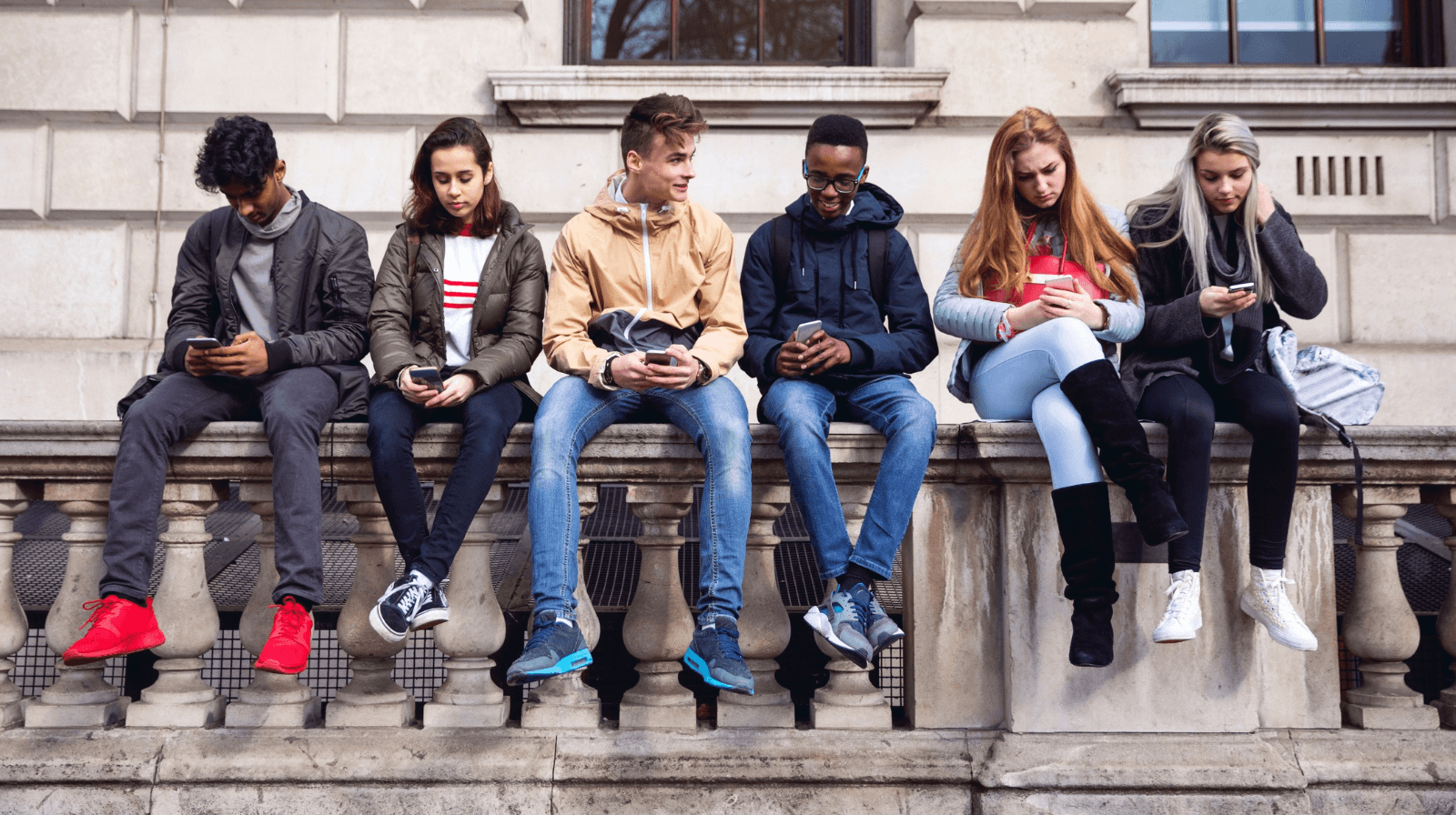
If Bill C-34, the Safe Social Media Act, becomes law in Canada, there will be a new minimum age requirement: people will have to be 16 or older to log in to TikTok, Snapchat, Meta platforms such as Instagram, or any other social media platform that fails to comply with safety standards established by the federal government.
Polls show broad support for the proposed legislation, with 75 to 90 per cent of participants in favour. . This is no surprise, given that there are widespread concerns about the mental health and safety risks associated with negative digital content.
However, experts in various fields warn that a social media ban for young people could backfire and, in fact, put them in harm’s way. Many argue that making kids safer in the digital media era will require more than telling people —of any age — to just log off.
Digital media: It’s complicated
Cyberbullying, the manosphere, health misinformation, and other results of problematic smartphone use have been in the news — a lot — over the past several years.
A recent report from the Knowledge Institute on Child and Youth Mental Health and Addictions (the Knowledge Institute) in partnership with the Mental Health Commission of Canada (the Commission) found that, while there is no shortage of negative experiences to be found on social media, some young people log on and find something else — a lifeline.
“In my early teens, I didn’t have a lot of friends at school,” recalls Chloe Kizito, a national youth journalist and director of global engagement at Model UN Academy. “So, when I got on social media, I found all these kids my age doing really cool things, and I was able to build a community with them.”
Kizito says there is lower pressure involved in making friends over Messenger than walking up to someone at school, where “all these eyes are on you.”
For people with social anxiety or who live in an area where they don’t have much in common with anyone else, finding an online community can feel like finding a sanctuary.
Dr. Shelley Craig, Canada Research Chair in Sexual and Gender Minority Youth at the University of Toronto’s Factor-Inwentash Faculty of Social Work, says her research has consistently found that many 2SLGBTQI+ youth use social media to build the agency and self-efficacy that are critical to mental health.

Dr. Shelley Craig
“What we find is that 2SLGBTQI+ youth continue to say that online is safer than offline,” says Craig. “And that’s often why they wind up online, particularly rural youth, marginalized youth, those with immigration experiences, or those who are not accepted in their homes or communities.”
Some youth Craig has interviewed have pointed out that it’s easier to leave a hostile chat than an unsafe school or an abusive home. She worries about what will happen to vulnerable populations if they’re cut off from the critical building blocks of mental health for all youth, such as support, belonging, and hope, which some of them may only be able to find online.
“For some 2SLGBTQI+ youth, digital media is where they’re able to access most of their mental health programs,” says Craig. “If we’re taking these away, what are we replacing them with?”
That said, Craig fully recognizes there are serious risks associated with social media use, because users may face the layered exposure to discrimination and bullying that they may also experience offline. She says these are “scary times” for youth and argues that the mental health of 2SLGBTQI+ youth may be even more at risk than that of other populations. As a result, we need to take caution when removing social media support and resources that they have deemed life-saving.
Digital media: How we use media matters
As smartphone use has become increasingly prevalent in the past couple of decades, researchers, journalists, and concerned citizens have wondered about the impact of social media on mental health. A troubling pattern has emerged from research on this topic. While purposeful engagement with digital media is associated with positive online experiences, excessive and passive use, such as endless scrolling, is linked to mental health risks.
The report from the Knowledge Institute and the Commission found that increased screen time was associated with reduced concentration, sleep disruption, and increased anxiety, stress, depression, and suicidal thoughts. It also found that competing demands for attention can strain family relationships. Exposure to misinformation and harmful content can reduce people’s trust in reliable sources as well as discourage people from seeking help. In addition, the report highlighted concerns about cyberbullying, online harassment, and “social comparison pressure,” the last of which is associated with lower self-esteem and a worsened body image.
“I have experienced how social media can create constant pressure to compare ourselves to curated versions of other people’s lives and bodies,” says Victoria Gracie, a member of the Commission’s Youth Council. “For many young people, especially those already vulnerable to body image concerns or eating disorders, these platforms can quietly shape self-worth around appearance, productivity, and external validation in ways that are deeply harmful to mental health.”
Our society’s reliance on digital media for connection intensified during the pandemic. At the time, though, many of us thought of social media platforms as a lifeline that took the sting out of social isolation. Along with ghost kitchens, they were championed as heroes that helped us get through shutdowns.
“A few years ago, it was ‘try to find your friends online because you can’t see them in person,’” says Craig. “It’s an interesting 180-degree turn in a really short period of time. It feels almost like a whiplash policy for young people.”
World-building: Creating safe and inclusive spaces
Some argue that a ban on social media is a blunt instrument. They say that we need a more nuanced approach to make social media platforms safer spaces. What would that look like? It might take a combination of regulation and education, combined with the power we all have to build better worlds — both in real life and in the digital universe.
In fact, many young people are already working on this. Chloe Kizito works with MediaSmarts, Canada’s Centre for Digital Media Literacy, with a team of teen fact-checkers who produce shareable TikTok videos debunking online misinformation.

Chloe Kizito
“There are also resources at MediaSmarts for things like very simple steps you can take to make sure your algorithm is okay,” says Kizito. “It can be tweaked to only bring the content you’re interested in and not things that aren’t appropriate.”
Kizito worries that shutting young people out of digital platforms is tantamount to silencing youth voices. She notes that while youth should be the first people asked about how to make social media safer, adults should share in the heavy lifting. For example, she’d like to see ministries of education build a course about digital literacy and misinformation.
Many observers feel that social media companies should take responsibility too. It’s worth noting that the Safe Social Media Act could address this issue. As John Matheson, senior fellow, tech policy, at McGill University’s Centre for Media, Technology and Democracy, noted recently, the proposed federal legislation involves the formation of a Digital Safety Commission that could “exempt from the age limit any company that meets a high safety standard for children.”
Matheson argues that Bill C-34 isn’t really a ban but rather a regulatory system that would allow young users to access platforms that have shown a commitment to building better worlds with more inclusive and safer spaces.
We’re probably a long way from resolving the complex issue of social media and mental health. It’s also unlikely that there is a single solution. The conversation is pointing us toward the importance of safer platforms, digital literacy, and ongoing collaborations with young people.
It’s worth trying to rehabilitate the digital realm. Anyone who uses social media knows the joy that comes from an online friend’s seemingly positive affirmation. When it works, it works really well.
Don Maheleka, member of the Commission’s Hallway Group, puts it this way:
“For me, social media was most meaningful when it was curated and co-created with peers. It gave African, Caribbean, and Black youth space to name mental health experiences we were not seeing reflected elsewhere, build pride in our diverse identities, validate our lived experiences, use live conversations and creative storytelling in ways that felt healing, and form relationships across geography, culture, and community.”
Resources, Sources and Documents:
Digital Media and Youth – Mental Health Commission
338 Canada – Canadians broadly support social media ban for kids
