
When Chris Cull was a teenager living in Bowmanville, Ont., his father was diagnosed with Huntington’s disease. “I started drinking really heavy to kind of cope with what was going on with him,” he shares. Soon after, his father started trying to take his own life on a consistent basis, and he died by suicide when Cull was 22. “Riding that line of stress for as long as I did, I sought out Percocets,” he says. “I became addicted to not feeling the stress as much as it was the actual substance itself.”
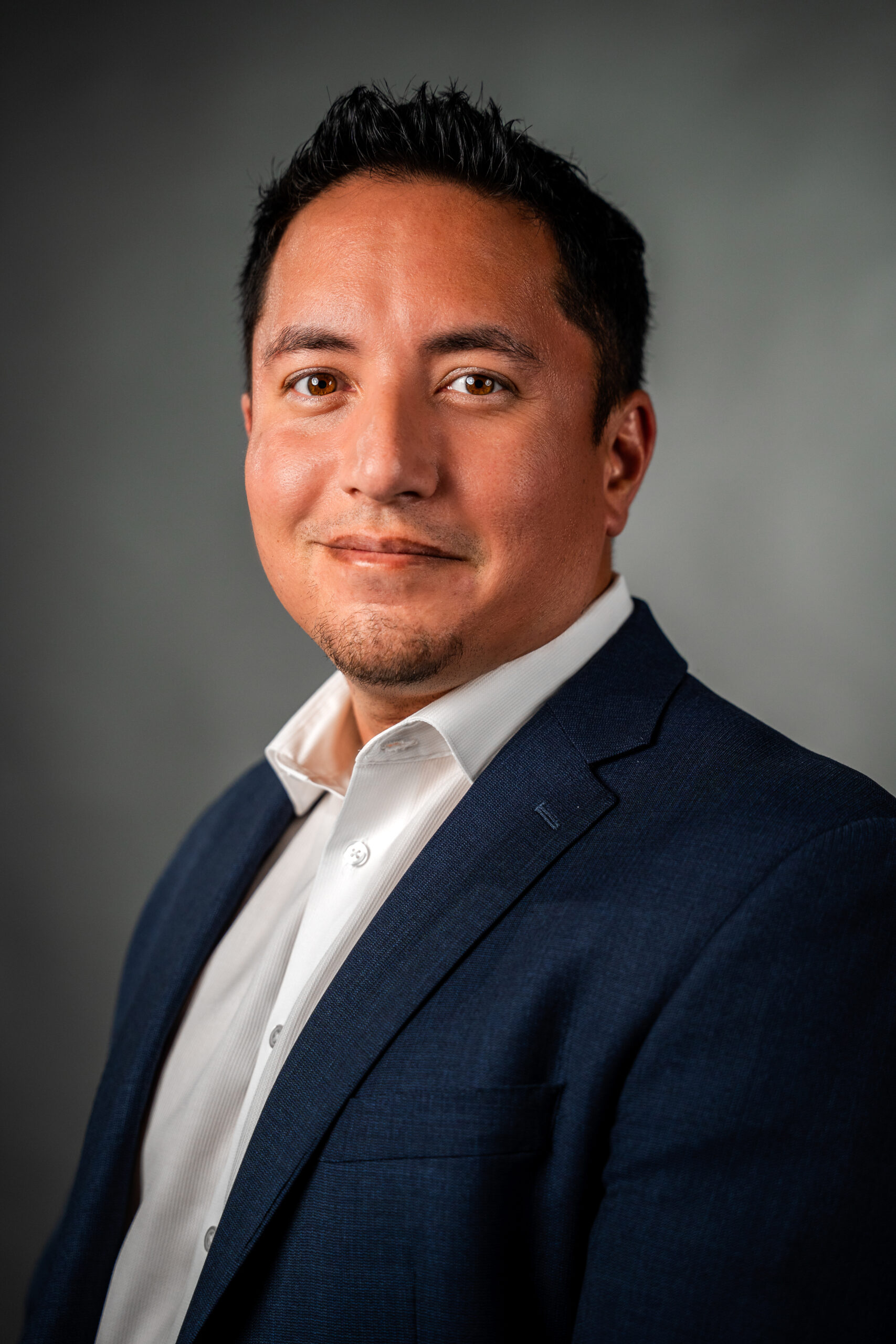
Chris Cull
Life continued to be challenging for Mr. Cull after his dad passed away. Although his father left him his mortgage-free home and six figures in the bank, Mr. Cull says he spent the money on substances. “I was using around 580 milligrams of OxyContin a day for a couple of years. I lost a girlfriend I wanted to marry at the time. I lost everything that meant anything to me,” he says. “I then went on methadone because I didn’t know addiction services existed.”
It was his local library that kickstarted his road to recovery. “I didn’t have cable, internet, a computer, so the only entertainment I had was what I got from the Bowmanville library on my way home from the methadone clinic,” he says. “I would just take out a few books every time I was there.… And then I found a book called Man’s Search for Meaning by Dr. Viktor Frankl and that changed my whole perspective on life. It taught me to more or less find meaning in the suffering of it all and that I could actually use this and turn it into something positive.”
Soon after, Mr. Cull decided he was going to get off methadone and ride a bike from Victoria, B.C., to St. John’s, Nfld., to film a documentary on the opioid crisis in Canada. “It’s a tall dream to have when you have no experience in film, journalism, public speaking, public relations. I hadn’t ridden a bike in 10 years. I was on 120 milligrams of methadone and I’d steal my food to eat.”
But, despite the odds, he did it.
Since then, he’s racked up an impressive list of accomplishments. He now serves on the Crisis Intervention Team in an Oshawa, Ont., emergency department, consults on strategy and policy for groups including the World Health Organization, and has represented Canada at the United Nations Commission on Narcotic Drugs. He’s also a filmmaker, motivational speaker, and author of a book about his journey, which will be released in the coming year.
Mr. Cull, of course, is not the only person to find themselves using opioids early in life. According to Health Canada, between 2014 and 2024, there was a statistically significant increase in the number of students in grades seven to 12 who reported using prescription opioid pain relievers for non-recommended purposes. For example, in 2014, 4.2 per cent of grade 11 students reported doing so; by 2024, this had increased to 7.8 per cent. And since 2016, youth under age 29 who have died from opioid toxicity account for between 15 and 22 per cent of all opioid deaths in Canada, depending on the year.

Dr. Kim Corace
Dr. Kim Corace, vice president of innovation and senior scientist at the Canadian Centre on Substance Use and Addiction and associate professor of psychiatry at the University of Ottawa, says it’s important to look at the issue holistically. “We know young people who have substance use health problems are more likely to develop mental health problems and that young people with mental health problems are more likely to develop substance use health problems ” she says. “When an individual is experiencing both, the natural mindset is we need to treat one problem before the other to be successful. We need to change that approach. Since both issues are so intertwined with each other, to be most effective we need to treat them simultaneously.”
Unfortunately, there can be many obstacles for youth in accessing help, such as geographic and financial barriers, the complexity of navigating the health-care system, transportation accessibility, education commitments, and, as Mr. Cull experienced, stigma. “Funny enough, I [now] work in the same emergency department where I was accused of breaking my finger on purpose to get painkillers,” he says. “I’ve been called everything you can imagine.”
There are also systemic barriers. “We often presume whatever worked with adults, we’d just adapt for kids,” says Dr. Corace. “That concept that young people are just smaller adults, when they’re not, they have their own unique needs, their own experiences, where they get help is going to be different, how they experience their disorders and comorbidities [is different].”
She adds: “There’s a lack of professionals who would feel that they have the capacity to work with people who have significant opioid use … and concurrent disorders in general. And then that is disproportionately felt by young people because then they have even less services and less providers that feel confident and competent to treat them.”
How do we move forward? One important step is for communities to work alongside young people with lived experience and their families because recovery looks different for everyone. “It’s important to work with our young people and not have that one-size-fits-all approach,” says Dr. Corace. “You can’t design systems for people; we have to design systems with people.”
Having more people like Mr. Cull in front-line positions is part of that. “They’re like, ‘You get it.’ I’m like, ‘Yeah, I get it and I promise you this isn’t the end,’” he says. “There’s an inherent power dynamic between a nurse and a patient.… But me, like I remove all that completely.”
And, as Dr. Corace suggests, integrated treatment should become the norm. “Currently patients get their mental health treatment from mental health services and their substance use health treatment from substance use health services, when really, we know the gold standard is integrated treatment from one team. Doesn’t have to all be in the same location, but we’re treating both together.”
For youth navigating opioid use, those kinds of changes can make a meaningful difference.
