
In December 2016, when 30-year-old Soleiman Faqiri died in temporary custody at the Central East Correctional Centre (CCEC), in Lindsay, Ont., he’d never even been convicted of a crime.
Soleiman, who had a history of schizoaffective disorder after being involved in a car crash, had been accused of aggravated assault, assault, and uttering threats following a dispute with a neighbour. He was being held at CCEC, a facility that’s primarily a remand (or pre-trial) centre. He was waiting for an assessment to determine if he could be better served in a forensic hospital. Few who were familiar with how much Soleiman’s mental illness was worsening while he was in custody, though, had any doubt that he was in the wrong place.
“Soleiman was there for 11 days,” says his oldest brother, Yusuf Faqiri. “Three days before his death, my dad and I went to a courthouse and we testified. So did the nurse from the correctional centre, who said, ‘We can all agree that Soleiman is not well and we can also all agree that he should not be where he is.’”
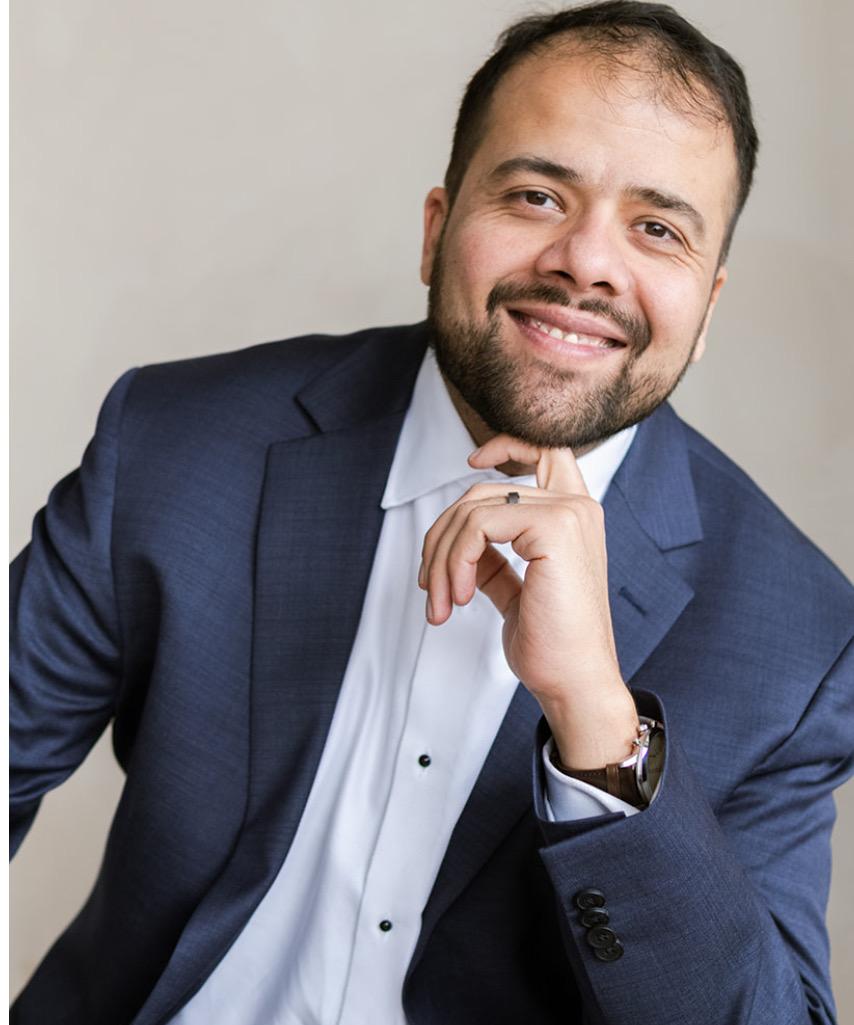
Yusuf Faqiri
Yusuf says that the judge ruled that Soleiman should be removed from the facility and sent to a hospital.
“But he didn’t make it,” Yusuf says. “And the reasons are devastatingly simple: first, there was no bed available because of a bed shortage. Second, he was so sick that they could not even assess him to be unwell. We took care of ‘Soli’ for 11 years, yet it took the system 11 days for him to be killed under their care.”
Soleiman’s mental health continued to deteriorate over the next three days at CCEC. Then, on December 15, after guards used violent force on him and left him in a prone position restraint (associated with asphyxia and circulation risks), a medical emergency was declared shortly after, and within minutes Soleiman was pronounced dead. The pathology report documented more than 50 bruises consistent with blunt impact trauma. The inquest found guards had committed 60 policy breaches in connection with his death, and the Chief Pathologist ruled his death was directly linked to the actions of the correctional officers. Seven years later, in 2023, an inquest into his death was finally held. The jury ruled his death a homicide.
We don’t know exactly how many people living with mental illness die in custody in Canada every year. We do know, though, that one is too many. We also know that Soleiman Faqiri’s fate points to larger systemic problems, which also took the lives of 19-year-old Ashley Smith in Kitchener in 2007 and Edward Snowshoe, who, in 2010, died by suicide after 162 days in segregation at the Edmonton Institution. These systemic issues also disproportionately impact First Nations, Inuit, and Métis peoples, African, Caribbean, and Black, and other racialized and equity-deserving communities.
Action on mental health and criminal justice
For the past five years, the Mental Health Commission of Canada has been working in partnership with people with lived and living experience of criminal justice involvement and with experts working within and adjacent to the criminal justice and forensic mental health systems to develop Finding New Pathways: An action plan for criminal justice and mental health in Canada. This national action plan presents 68 recommendations for creating more compassionate, responsive, and supportive criminal justice and forensic mental health systems. It prioritizes prevention, diversion, end-to-end supports, and continuity of care. One key issue that the action plan takes aim at is the overrepresentation of people with mental health concerns in Canada’s criminal justice system.
It has been estimated that over 70 per cent of federally incarcerated people in Canada met the criteria for at least one mental health disorder. Over 10 per cent of people in custody met the criteria for serious mental illness, a rate that is two to three times higher than in the community.
As such, pre-emptively diverting people with mental health conditions away from the criminal justice system is a key component of the action plan.
“Even the best of jails, with the best of intent and the best of programming, aren’t very therapeutic,” says Howard Sapers, executive director of the Canadian Civil Liberties Association (CCLA), former correctional investigator of Canada, and a key advisor during the development of the action plan. “Jails aren’t hospitals.”
Sapers says that anyone presenting with a serious mental illness — as Soleiman Faqiri was — must be treated as a patient first and redirected to a facility designed for therapeutic care.
“I’m not saying anything that controversial,” Sapers adds. “If you were in the middle of a heart attack or had broken your legs in a fall, you’d be put in an ambulance and taken to the hospital, where you’d be treated as a patient first.”
Unfortunately, people with substance use health and mental health concerns aren’t consistently treated that way. Many are sent to correctional facilities despite needing urgent care.
Action on the criminalization of mental health
Whether this injustice is due to stigma, insufficient mental health resources, the lack of training in mental health care among first responders, or a combination of factors arising from stressed and broken systems, the criminalization of mental health in Canada is something we need to become more vigilant about.
“Was Soleiman’s death unique? Not by a long shot,” says Sapers, noting that the number of people experiencing mental health challenges in Canada’s correctional institutions is increasing, as is the number of people experiencing pre-trial incarceration.
“So, you have this huge cohort of people who are both mentally unwell and not yet convicted of an offence being sent to remand centres,” Sapers explains. “Instead of being sent someplace for rehabilitation or treatment, where they might have a case team around them, they’re being sent to the most crowded, the most chaotic, and the most unsettled facilities in our correction system.”
“That’s not a recipe for smooth sailing,” he adds. “It’s a recipe for tragedy.”
Catherine Latimer, executive director of the John Howard Society of Canada and another key advisor during the development of the action plan, says now is the time for action to find (or create) off-ramps for people living with mental health issues who become involved with the criminal justice system.
“It’s not enough to just prevent people from being sent to the corrections system, though,” Latimer adds. “Because the criminal justice system, itself, causes mental health concerns, from the anxiety, stress, and depression that comes with being charged with a criminal offence, as well as the hurdles people face in the correctional system.”
Those hurdles include being cut off from community supports and coping with crowding and excessive noise, and, in some cases, violence. Individuals also face threats and punishments, such as solitary confinement, which can be devastating.
“I’ve spoken with people sent to prison who went from being chippy and fine to showing signs of suicidal distress within 72 hours of being placed in isolated confinement, so it can happen very quickly,” says Latimer.
Solitary confinement is currently capped at 15 days in Ontario, after a 2019 ruling by the province’s Court of Appeal. If 15 days sounds like a long time, well, it does to Catherine Latimer, too.
Reforming the justice and corrections systems
It isn’t only people who are incarcerated who have a higher risk of mental health issues in these systems.
From correctional officers to first responders and dispatchers to nursing staff in correctional facilities, our public safety workers often experience high rates of post-traumatic stress disorder, substance use disorder, anxiety, and depression. Supporting these workers is a crucial part of a holistic approach to reforming our broken systems.
It’s one thing to have a plan and another to take action and initiate meaningful reform. Nobody knows this better than Yusuf Faqiri, who is still working to get justice, as well as to raise awareness, a decade after his brother died in temporary custody. Nobody from the Ontario government has issued even an apology to the Faqiri family, despite the homicide ruling.
“On the night of his death, I made a promise to my mother that we would get to the truth of Soleiman’s death,” says Yusuf. “And then on the day that we buried him, I promised my brother that I would not let his death be the last chapter of his life. After my brother’s death in prison, my family lost faith in the system, but we still believe in justice.”
Yusuf’s tireless efforts helped secure the inquest. He continues to advocate for transparency and accountability in the corrections system. Recently, he collaborated with the Mental Health Commission of Canada to highlight his brother’s story in the action plan, helping to illustrate the need for change in the system.
“Soleiman’s death is an opportunity for us to transform corrections,” says Yusuf. “It’s an opportunity for redemption. It’s an opportunity for us to look in the mirror and see what we become as a society when we put people living with mental illnesses in jails.”
He adds, “As tragic as his story was, this is an opportunity to honour him by trying to bring about systemic change.”
Resources, sources, and documents
Finding New Pathways – An action plan for criminal justice and mental health in Canada
