If you are in distress, you can call or text 988 at any time. If it is an emergency, call 9-1-1 or go to your local emergency department.
On October 9-10, 2019, representatives from the Mental Health Commission of Canada, Inuit Tapiriit Kanatami, the Canadian Centre on Substance Use and Addiction, and the Nunatsiavut Department of Health and Social Development hosted an Inuit forum on cannabis and mental health in Happy Valley-Goose Bay, Newfoundland and Labrador. This two-day dialogue marked the first opportunity for Inuit across Inuit Nunangat to come together to discuss cannabis. The purpose of the forum was to have the participants exchange knowledge and identify research gaps and priorities as a way to begin the process of developing an Inuit-specific cannabis and substance use research agenda. While the event included presentations, most of the time was spent working in small groups while engaging in wide-ranging discussions centred on cannabis, mental health, and research. Topics included cannabis use and access, risks, benefits, challenges, and best practices. Various areas of expertise were represented, including mental health and addiction counsellors, community health representatives, public health practitioners, policy advisers, and Elders. Participants wanted more information on (1) cannabis use as a form of harm reduction (for other substances), (2) the different strains of cannabis and their uses, (3) methods of use, (4) the long-term effects of smoking cannabis, and (5) the impacts of use on pregnancy and breastfeeding. After the discussion, participants worked to develop the following research questions: Want more info? Read the final report.Purpose

Methodology
Research questions
Key Findings
On October 9-10, 2019, representatives from the Mental Health Commission of Canada, Inuit Tapiriit Kanatami, the Canadian Centre on Substance Use and Addiction, and the Nunatsiavut Department of Health and Social Development hosted an Inuit forum on cannabis and mental health in Happy Valley-Goose Bay, Newfoundland and Labrador. This two-day dialogue marked the first opportunity for Inuit across Inuit Nunangat to come together to discuss cannabis. The purpose of the forum was to have the participants exchange knowledge and identify research gaps and priorities as a way to begin the process of developing an Inuit-specific cannabis and substance use research agenda. While the event included presentations, most of the time was spent working in small groups while engaging in wide-ranging discussions centred on cannabis, mental health, and research. Topics included cannabis use and access, risks, benefits, challenges, and best practices. Various areas of expertise were represented, including mental health and addiction counsellors, community health representatives, public health practitioners, policy advisers, and Elders. Participants wanted more information on (1) cannabis use as a form of harm reduction (for other substances), (2) the different strains of cannabis and their uses, (3) methods of use, (4) the long-term effects of smoking cannabis, and (5) the impacts of use on pregnancy and breastfeeding. After the discussion, participants worked to develop the following research questions: Want more info? Read the final report.
Purpose
Methodology
Research questions
Key Findings

SHARE THIS PAGE
Review our Assessment Framework for Mental Health Apps — a national framework containing key standards for safe, quality, and effective mental health apps in Canada.
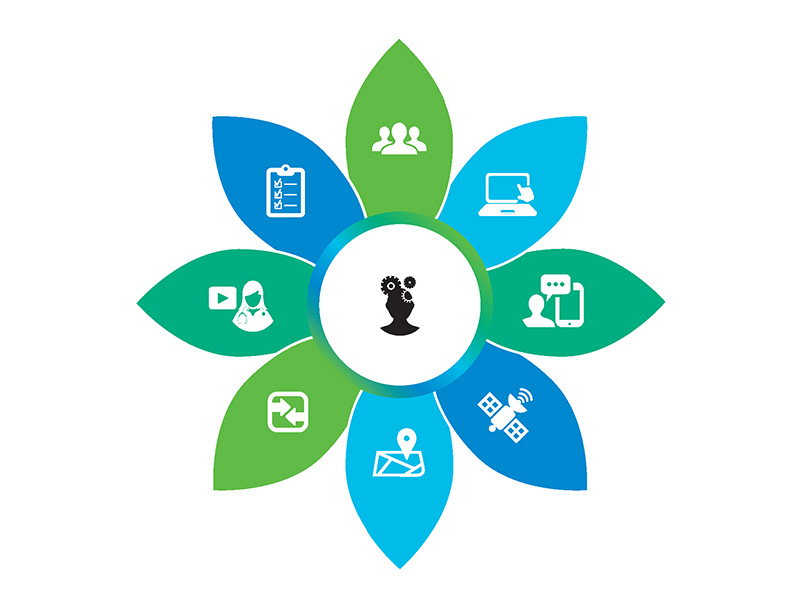
To help expand the use of e-mental health services, we developed four online learning modules based on our Toolkit for E-Mental Health Implementation, in collaboration with the Centre for Addiction and Mental Health (CAMH).
Stepped Care 2.0© (SC2.0) is a transformative model for organizing and delivering evidence-informed mental health and substance use services.
We use cookies and similar technologies to make this website work, understand site usage, and improve your experience. You can accept all cookies, or reject non-essential cookies.
Manage your cookie preferences below:
Essential cookies enable basic functions and are necessary for the proper function of the website.
These cookies are needed for adding comments on this website.
Google Tag Manager simplifies the management of marketing tags on your website without code changes.
Statistics cookies collect information anonymously. This information helps us understand how visitors use our website.
Google Analytics is a powerful tool that tracks and analyzes website traffic for informed marketing decisions.
Service URL: policies.google.com (opens in a new window)
Clarity is a web analytics service that tracks and reports website traffic.
Service URL: clarity.microsoft.com (opens in a new window)
Marketing cookies are used to follow visitors to websites. The intention is to show ads that are relevant and engaging to the individual user.
LinkedIn Insight is a web analytics service that tracks and reports website traffic.
Service URL: www.linkedin.com (opens in a new window)
Pinterest Tag is a web analytics service that tracks and reports website traffic.
Service URL: policy.pinterest.com (opens in a new window)