If you are in distress, you can call or text 988 at any time. If it is an emergency, call 9-1-1 or go to your local emergency department.
The Roots of Hope model builds on community expertise to implement suicide prevention and life promotion initiatives based on 5 pillars of action and 13 guiding principles. Since the launch of a Research Demonstration Project in 2018, Roots of Hope has been implemented in more than 20 communities, including three provinces and one territory. 2023 was an impactful year for the model. The results of the Research Demonstration Project were shared in early 2023, and the focus for the remainder of the year was on expanding upon successes and addressing potential areas of improvement. Significant work was undertaken to standardize Roots of Hope tools and templates for efficient data collection and effective impact measurement. The Roots of Hope team focused its efforts on building intercommunity connections, supporting implementation and sustainability efforts, and promoting the model to stakeholders across Canada. These and other efforts have resulted in 15 communities contacting the Roots of Hope team indicating interest in learning more and possibly adopting the model. These promising discussions will continue in 2024 with particular consideration given to establishing relationships with Indigenous communities and learning more about the distinct mental health and wellness needs of First Nations, Inuit, and Métis peoples. We are honoured to share how our work inspires change, raises suicide prevention awareness, and helps communities engage in life promotion – from coast to coast to coast.


SHARE THIS PAGE
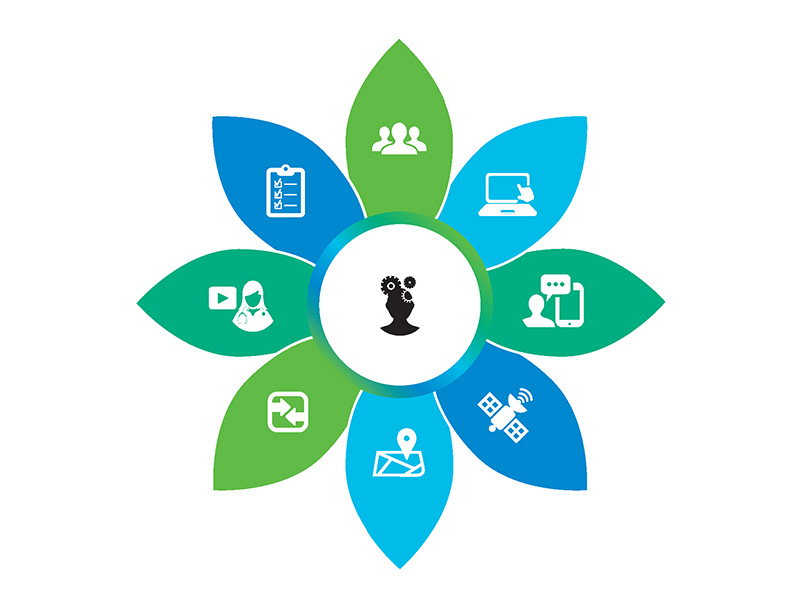
Review our Assessment Framework for Mental Health Apps — a national framework containing key standards for safe, quality, and effective mental health apps in Canada.
To help expand the use of e-mental health services, we developed four online learning modules based on our Toolkit for E-Mental Health Implementation, in collaboration with the Centre for Addiction and Mental Health (CAMH).
Stepped Care 2.0© (SC2.0) is a transformative model for organizing and delivering evidence-informed mental health and substance use services.


We use cookies and similar technologies to make this website work, understand site usage, and improve your experience. You can accept all cookies, or reject non-essential cookies.
Manage your cookie preferences below:
Essential cookies enable basic functions and are necessary for the proper function of the website.
These cookies are needed for adding comments on this website.
Google Tag Manager simplifies the management of marketing tags on your website without code changes.
Statistics cookies collect information anonymously. This information helps us understand how visitors use our website.
Google Analytics is a powerful tool that tracks and analyzes website traffic for informed marketing decisions.
Service URL: policies.google.com (opens in a new window)
Clarity is a web analytics service that tracks and reports website traffic.
Service URL: clarity.microsoft.com (opens in a new window)
Marketing cookies are used to follow visitors to websites. The intention is to show ads that are relevant and engaging to the individual user.
LinkedIn Insight is a web analytics service that tracks and reports website traffic.
Service URL: www.linkedin.com (opens in a new window)
Pinterest Tag is a web analytics service that tracks and reports website traffic.
Service URL: policy.pinterest.com (opens in a new window)