If you are in distress, you can call or text 988 at any time. If it is an emergency, call 9-1-1 or go to your local emergency department.
The Mental Health Commission of Canada (MHCC) recognizes the importance of ensuring that its programs and policies are informed by the knowledge of people who have lived and living experience (PWLLE) of mental health and substance use health concerns. Their involvement brings a diversity of perspectives to our work, enriches our organization, and leads to more effective and higher quality work. The MHCC established two advisory councils, the Youth Council (2008) and the Hallway Group (2009), to ensure that the voices of lived and living experience are embedded in the MHCC’s work. To ensure meaningful engagement of council members, a two‑year pilot project was implemented using the International Association for Public Participation (IAP2)’s Spectrum of Public Participation. An adapted version of the IAP2 spectrum was developed in collaboration with advisory council members to reflect how PWLLE are engaged at the MHCC. Throughout the two-year pilot, engagement opportunities were tracked, allowing us to leverage the advice, expertise, and interests of our council members by involving them in the decision‑making process. This approach has enhanced council members’ trust in the MHCC, increased the MHCC’s credibility among council members, improved the quality of the MHCC’s decisions, increased transparency, and built stronger relationships. The IAP2 spectrum outlines various levels of public participation in decision-making processes. It provides a flexible and adaptable framework for engaging contributors at different stages, from informing them about a decision to empowering them to be actively involved in the process. The spectrum values the inclusion of all contributors and ensures their voices are heard and considered.


SHARE THIS PAGE
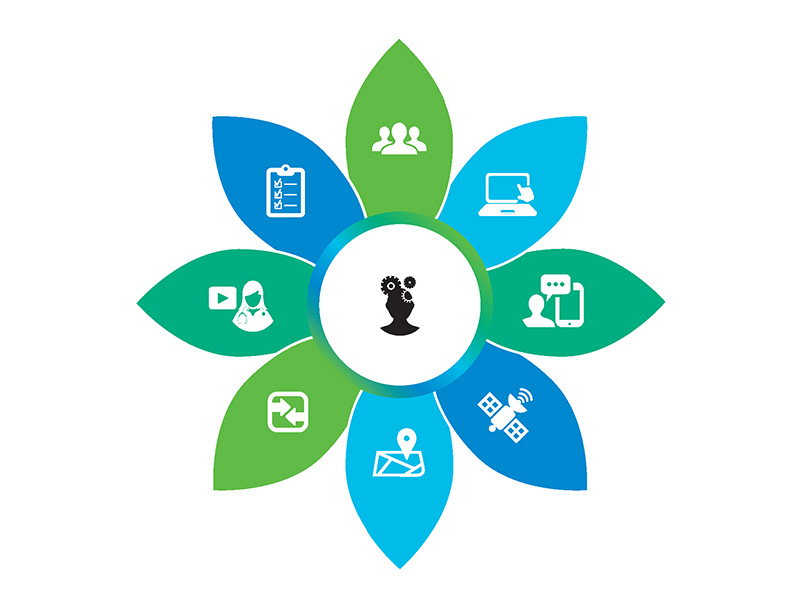
Review our Assessment Framework for Mental Health Apps — a national framework containing key standards for safe, quality, and effective mental health apps in Canada.
To help expand the use of e-mental health services, we developed four online learning modules based on our Toolkit for E-Mental Health Implementation, in collaboration with the Centre for Addiction and Mental Health (CAMH).
Stepped Care 2.0© (SC2.0) is a transformative model for organizing and delivering evidence-informed mental health and substance use services.


We use cookies and similar technologies to make this website work, understand site usage, and improve your experience. You can accept all cookies, or reject non-essential cookies.
Manage your cookie preferences below:
Essential cookies enable basic functions and are necessary for the proper function of the website.
These cookies are needed for adding comments on this website.
Google Tag Manager simplifies the management of marketing tags on your website without code changes.
Statistics cookies collect information anonymously. This information helps us understand how visitors use our website.
Google Analytics is a powerful tool that tracks and analyzes website traffic for informed marketing decisions.
Service URL: policies.google.com (opens in a new window)
Clarity is a web analytics service that tracks and reports website traffic.
Service URL: clarity.microsoft.com (opens in a new window)
Marketing cookies are used to follow visitors to websites. The intention is to show ads that are relevant and engaging to the individual user.
LinkedIn Insight is a web analytics service that tracks and reports website traffic.
Service URL: www.linkedin.com (opens in a new window)
Pinterest Tag is a web analytics service that tracks and reports website traffic.
Service URL: policy.pinterest.com (opens in a new window)