If you are in distress, you can call or text 988 at any time. If it is an emergency, call 9-1-1 or go to your local emergency department.
The mental health and substance use health (MHSUH) impacts of COVID-19 and the overdose crisis have increased the gap between what the population needs and what the service system can provide. Now more than ever, Canada needs a MHSUH workforce strategy to coordinate planning across jurisdictions, provider types, and public and private sectors. To identify planning trends in different countries, we conducted a rapid environmental scan of workforce strategies and reforms published between 2012 and 2023, identifying 311 policy documents and 39 academic papers in the United Kingdom (U.K.), Australia, New Zealand, Italy, Germany, the United States, and Canada. The scan will inform Policy Options for a Pan Canadian MHSUH Workforce Strategy, a Canadian Institutes of Health Research funded project.


SHARE THIS PAGE
Review our Assessment Framework for Mental Health Apps — a national framework containing key standards for safe, quality, and effective mental health apps in Canada.
To help expand the use of e-mental health services, we developed four online learning modules based on our Toolkit for E-Mental Health Implementation, in collaboration with the Centre for Addiction and Mental Health (CAMH).
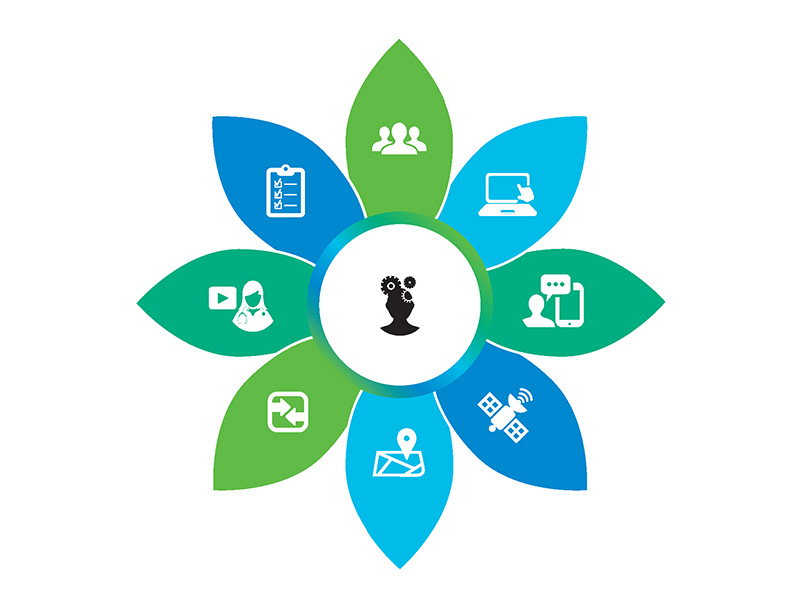
Stepped Care 2.0© (SC2.0) is a transformative model for organizing and delivering evidence-informed mental health and substance use services.
We use cookies and similar technologies to make this website work, understand site usage, and improve your experience. You can accept all cookies, or reject non-essential cookies.
Manage your cookie preferences below:
Essential cookies enable basic functions and are necessary for the proper function of the website.
These cookies are needed for adding comments on this website.
Google Tag Manager simplifies the management of marketing tags on your website without code changes.
Statistics cookies collect information anonymously. This information helps us understand how visitors use our website.
Google Analytics is a powerful tool that tracks and analyzes website traffic for informed marketing decisions.
Service URL: policies.google.com (opens in a new window)
Clarity is a web analytics service that tracks and reports website traffic.
Service URL: clarity.microsoft.com (opens in a new window)
Marketing cookies are used to follow visitors to websites. The intention is to show ads that are relevant and engaging to the individual user.
LinkedIn Insight is a web analytics service that tracks and reports website traffic.
Service URL: www.linkedin.com (opens in a new window)
Pinterest Tag is a web analytics service that tracks and reports website traffic.
Service URL: policy.pinterest.com (opens in a new window)