
In 1989, Elder Ivan Paquette decided to stop by Vancouver’s Friendship Centre. He had been living in the city, far from his home community, working in the entertainment industry as an actor. “I was living the white man’s way,” he says. Elder Ivan Paquette is a Cree/Métis musician, Knowledge Keeper, and former men’s health and wellness coordinator with the First Nations Health Authority. He is an outspoken advocate for men’s health. Music, arts, and culture play an important role in his work.
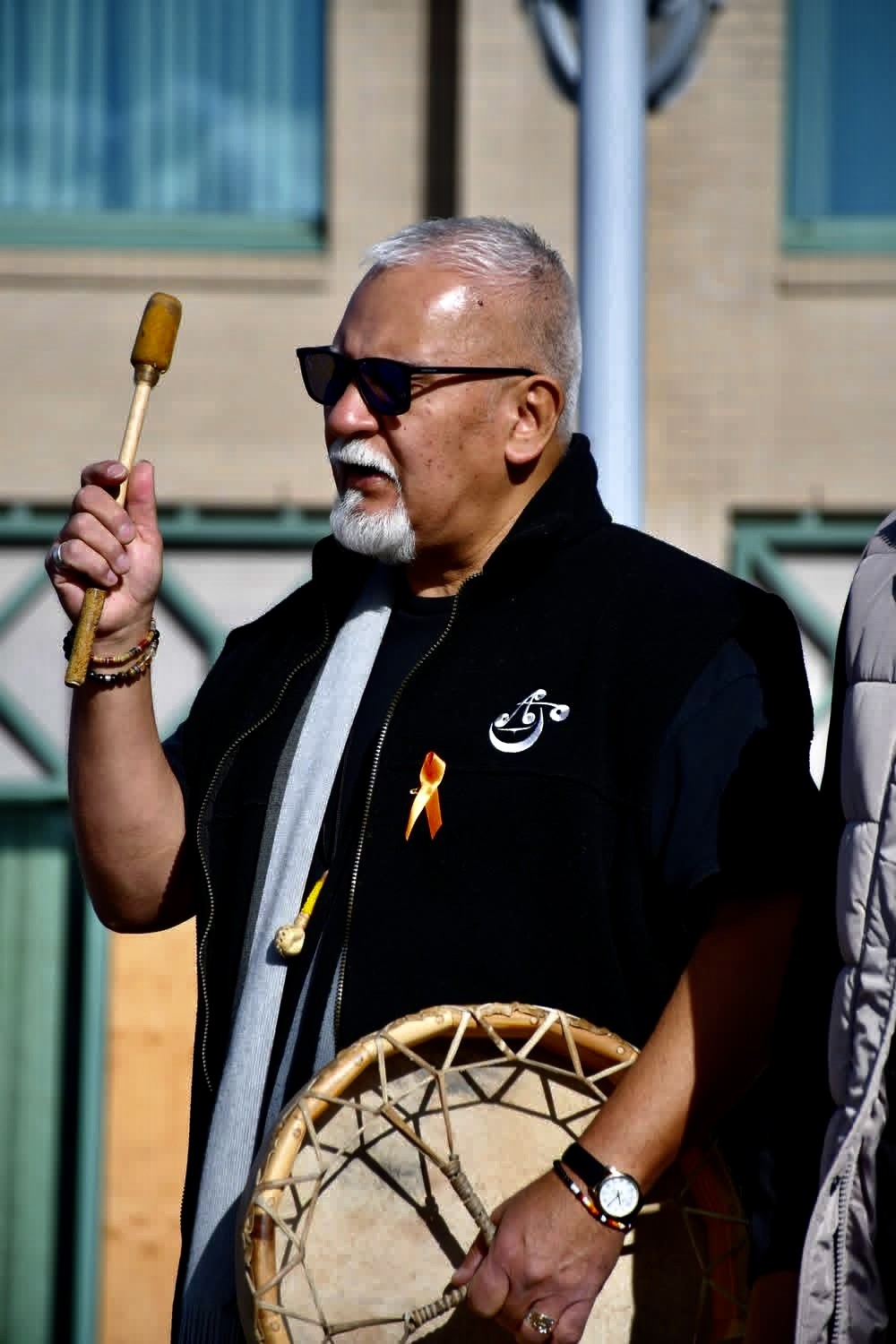
Ivan Paquette
Walking into the Friendship Centre on East Hastings was a pivotal moment in his life’s journey. “I felt home.” For First Nations, Inuit, and Métis peoples, this feeling can make all the difference.
“A huge part of the male segment of our population is still not able to talk about mental health,” says Jude Wong, a master practitioner in clinical counselling with 15 years of experiential training and experience in cross-cultural dialogue, healing, and ceremonial practices. In her work as a therapist, she has come across many men who have struggled to open up. “Even just entering the room and sitting down is huge.”
This struggle is rooted in societal views of emotion as weakness. Stigma forces men into silence, making them much less likely than women to seek help. As a response, the month of November is host to Movember, an annual event to draw awareness and end the silence around men’s health, including mental health.
“At best, the cost of silence is isolation,” Former Commission President and CEO, Michel Rodrigue writes in Tough Talk. “At worst, that silence can cost a life.” Suicide is the second leading cause of death among men age 15-34 in Canada, with roughly 75 per cent of Canada’s approximate 4,000 annual suicide deaths being among men.
“Our men have always been healers, fathers, protectors,” Elder Ivan Paquette says. “When society has stripped all that away from us, what do you have? You have a void.”
This void leads to higher rates of depression and deaths by suicide among Indigenous peoples. Suicide rates among First Nations peoples are two to three times higher than among the general population, and as much as five to seven times higher in some Inuit communities.
The underlying issue that Indigenous men face is in navigating a system that was not built for them — and in fact has, for generations, been directly structured against them.
For years, systemic oppression has blocked Indigenous peoples’ access to education, health care, and employment. Indigenous communities are thus disproportionately affected by poverty, housing insecurity, and food insecurity relative to the general population. These factors are all strongly linked to higher rates of suicidal ideation.
“I started to realize how fragmented our people are because of the system,” says Elder Ivan Paquette. The effects of residential schools, the ’60s Scoop, forced displacement, and cultural genocide are still felt today.
“We carry them from the womb,” says Elder Ivan Paquette. “We carry our mother’s trauma, and that mother from her mother, and all these things that have been passed on from generation to generation.”
Intergenerational trauma can impact us on a cellular level. “There’s increasing evidence-based research around this in the field of epigenetics,” Jude Wong explains.
While Indigenous peoples face an elevated risk of mental health struggles, their communities do not have increased access to resources. This is especially true in remote and northern communities, where many First Nations, Inuit, and Métis people live.
Despite the barriers, Indigenous resilience continues to shine. “Our power, our culture, our identity is so strong,” says Elder Ivan Paquette. Little by little, more accessible and culturally grounded resources for Indigenous peoples’ mental health are becoming available.
For Elder Ivan Paquette, connecting with his community was a crucial step for his healing. “Our Ancestors understood the importance of community and ceremony,” he says, “The land heals us. The drumbeat heals us. Laughter, our culture, our communities heal us.”
Access to community events and cultural programming has had a meaningful impact on Indigenous people’s mental health. “Culture reminds us that we belong,” says Elder Ivan Paquette. In a world that has tried to keep Indigenous people down and push them out, the feeling of belonging can help them cultivate their spiritual and emotional wellness. “We’ve never lost these gifts. We just have to wake back up into them and reclaim them.”
In spaces where Indigenous people do not have access to their cultural events and communities, they can create their own connection through the land. “When we spend time with the land, we practise our culture,” says Elder Ivan Paquette. “The land nourishes our Spirit.” Spending time outside in connection with the land, even for just five minutes at a time, can bring support and healing.
Culturally grounded care is essential for Indigenous peoples. As a practitioner with multi-racial ancestry, Jude Wong speaks to the need for this to be an active practice. “Each person needs to be supported in discovering, recovering, and reclaiming their own individual, family, and cultural identities, in a way that feels right for them and responds authentically to their journey.”
It can be difficult to find practitioners who make a concerted effort to work with this balance, which is why it is so important for Indigenous peoples to have access to culturally informed mental health resources. One such initiative is Noojimo Health, an Indigenous-owned platform that offers mental health services from Indigenous providers. The Hope for Wellness Helpline (1-855-242-3310) is another excellent resource, available 24/7 to all Indigenous people across Canada.
In recent years, many steps have been taken toward destigmatizing men’s mental health, and it shows. More and more men are finding the courage to come forward and ask for support. “I think the number of men who are awakening to that way of being is growing,” says Jude. With the growing numbers of men’s centres across the country, and the advent of men’s mental health resources such as HeadsUpGuys, more positive shifts should be on the horizon.
That said, more work is needed. Greater funding for Indigenous health and well-being would make a huge difference. While there are government initiatives such as the Non-Insured Health Benefits (NIHB) program for First Nations and Inuit, options for non-status Indigenous people and for Metis people are extremely limited. And while access to virtual mental health care is growing across Canada, this does not eliminate the need for more in-person care in remote communities.
As individuals, Indigenous men must do what they can to support each other. “It’s a collective process,” says Jude. They must make time to check in with themselves and with the men in their lives. Signs of depression can often go unnoticed. It is important to pay attention to changes in mood and conduct, such as drinking more, withdrawing from family and friends, or seeming angry and impulsive. The signs shouldn’t be ignored.
“As men, we were never meant to carry our burdens alone,” says Elder Ivan Paquette. “Our true strength is not found in silence. It is found in being honest about our struggles.”
If you or someone you know is dealing with suicidal thoughts, call Canada’s Suicide Crisis Helpline: 9-8-8.
