
Acknowledge that challenges for younger generations of adults are unique

Em Alexander and Colbi Mike
Em Alexander: People my age grew up in a very different environment than our parents and grandparents, who didn’t experience the overwhelming influence of technologies like digital media. We grew up with constant exposure to world events, which can have a big impact on young peoples’ mental health and well-being. That difference makes it especially important for mental health programs to include young peoples’ perspectives and input to be successful, engaging and meaningful to the people they serve.
Colbi Mike: Youth today face extra challenges, from our economy to mental health struggles and substance use to systemic racism. Indigenous youth, in particular, carry the burden of intergenerational trauma, and ongoing discrimination and many Indigenous mothers—honestly, I would say all—encounter systemic racism. I guess it’s just a lack of understanding of who we are as Indigenous people and where we are currently in out societal healing.
Bring more young people into conversations about mental health
Colbi says: Youth bring fresh perspective, lived experience, and innovative ideas to the table and, since they’re directly impacted by policies and programs, their involvement ensures that initiatives are relevant, effective, and empowering. Ignoring their voices in the past has led to gaps in understanding our needs. Involving young people not only builds better programming, it also fosters a sense of belonging, leadership, and accountability among young people. I think it’s imperative to involve people who’ve lived in this age of this time, and to empower them with a voice, right now.
Em says: Incorporating the voices of young people is a critical step in program development, particularly for programs that aim to serve youth. The Youth Council was established in 2008, and I consider the MHCC to be a leader in the field when it comes to including young people and people with lived experience in meaningful ways in their program and policy work. It’s so important for young people to be involved in decisions that will impact them.
Give people with lived experience of mental illness a bigger role in decision-making
Em says: It goes right back to the saying “nothing about us without us,” really. If you’re creating or updating policy that is relevant to people with lived experience, then they should be involved in that process from the start. Would you want someone to design support for you without listening to your experience or what you need, or what has or hasn’t worked before? Of course not. To get it right, you need to include lived experience. This is incredibly important in policy work because it can have lasting impacts on services, access, quality of care, and other things.
Colbi says: It’s absolutely critical to hear more from people with lived experience. Policy affects real lives and those impacted should have a seat at the table. People with lived experience have insights that professionals and decision makers might overlook, and their involvement ensures that policies are not only practical but also inclusive. Engagement also builds trust, accountability, and long-term success.
As an Indigenous mother, I have first-hand knowledge in navigating challenges such as barriers, cultural disconnect, and limited support systems. My lived experience helped me approach issues of empathy, cultural awareness, and ensure that programs and policies are grounded in real-life struggles and successes.
Em adds: As co-chair, my lived experience, both personally and as a caregiver, plays a role in my approach. My goal is to approach leadership from a trauma-informed and recovery-oriented lens, and to uplift and value the intersectional identities and experiences that our members hold. It’s been a very meaningful role for me to hold over the last several years and we operate very well as a council with respect, trust, and support.
The next steps include raising awareness, education and funding
Colbi says: Education is essential for reconciliation. Healthcare professionals need to understand the lasting impacts of residential schools, colonial policies, and systemic oppression to provide culturally safe care. While there have been efforts to include this education in some curriculum, the process is slow and inconsistent. Call to action #24 (from the Truth and Reconciliation Commission of Canada’s 94 Calls to Action) emphasizes that this is a priority, but we still need more accountability to ensure all healthcare workers are equipped to support Indigenous patients with respect and understanding.
Em says: From my own experience working at the intersection of non-profit and mental health sectors, there needs to be more support for the mental health workforce. We’re starting to see more awareness when it comes to that problem, but one of the biggest challenges I still see is good people wanting to be able to do more to help but, at a systemic level, not having the resources or capacity to do so. Sometimes this comes down to cost of services, access, wait times, or eligibility, but there’s no shortage of people wanting to support others. I sincerely hope that funding will be maintained for mental health care and related programs and initiatives throughout transitions in political governance.
We all have a role to play when it comes to providing support for people in need
Em says: When people are reaching out for support, don’t assume their identities, or their needs, or experiences – ask them, and listen with the intent to learn. It’s a challenging time right now, particularly for members of the 2SLGBTQI+ community. There are very real threats to safety for our community created by the hate and ignorance outside of our borders—and here in Canada, too. Check in on the people in your life from these groups because they are being targeted right now—BIPOC communities, 2SLGBTQI+ communities, immigrants/refugees, and others—and they need all the support they can get.
Colbi says: Mental health is deeply tied to the well-being of families and communities and yet mothers often face stigma, isolation, and limited access to safe mental health services. It’s important, therefore, to support mothers by investing in accessible and appropriate mental health care, childcare, and transportation.
We also need to keep creating programs that integrate cultural teachings and community support, because, for Indigenous people, healing often comes through reconnecting with our culture, language and communities. Investing in these areas can strengthen resilience and identity for future generations.
To mark Nutrition Month, the Mental Health Commission of Canada (MHCC) sat down with Christina Seely, Registered Dietitian, Certified Diabetes Educator, and co-chair of the Dietitians of Canada Addiction, Mental Health & Eating Disorders Network, to discuss the deeply intertwined relationship between our mental well-being and food choices, in a bid to give us all something more well-balanced to chew on.
“It’s complicated…”
A relationship with food. It’s something everyone has in common. In fact, I’d be willing to bet that if Facebook had a status update on the subject, we’d all be perpetually set to “it’s complicated.”
And it’s only getting more so.
Twenty years ago, the jury was still out on the connection between food and many chronic illnesses. Today, we know the right choices can help stave off depression, dementia, and a host of other health concerns.
No pressure, right?
Now, throw into the mix an appearance-obsessed culture and the relentless influence of online “lifestyle” purveyors, whose perfect plates and elevated palates can leave the rest of us feeling like we’re eating dust.
It’s hard to make thoughtful choices when we’re drinking from a firehose of mis- and disinformation, all while enduring shame and blame that can further disenfranchise us from a healthy relationship with food.
I chatted with Christina to understand how we can reframe this discourse, embracing a more compassionate, common sense approach.
It all comes down to science
While our stomachs might grumble, it’s actually our brains that have the hungriest cells. At a mere two percent of the body’s weight, our brains consume an astonishing 20 per cent of food energy.
To build and maintain its structure, the brain forages for 50 different nutrients, maximizing its function and protecting itself from harm.
“The production of feel-good neurotransmitters, like serotonin or dopamine, is enhanced or limited based on our diet,” explains Christina. “And while the causes of mental illness are complex, food is an essential building block of brain function.”
It follows then, that an optimal diet can improve mood and boost energy levels, and not just by a little bit.
A well-nourished brain is more resilient to stress, and nutrition affects brain health throughout our lives, from earliest childhood to our elderly years.
“Appropriate nutrition can reduce the risk of depression by about 40 per cent, and upwards of a third of Alzheimer’s diagnoses might be preventable through lifestyle choices,” says Christina.
Choices that, unfortunately, aren’t readily available to everyone.
“Take mental illness treatment and diet,” says Christina. “This may be a particularly fraught cross-roads. Common medications for serious mental illnesses can increase appetite, thirst and fatigue. Also, symptoms of mental illness can affect energy level and, by extension, the planning, shopping, and cooking process.”
A perfect storm, often leading to increased reliance on convenience foods and delivery options, which helps to explain the comorbidity between weight management and mental illness.
“There is a double stigma for people living with mental illness and a higher weight. And, because the mental and physical health systems often operate independently, people are less likely to receive best-practice care for their physical health,” says Christina, who runs a monthly dietetic clinic for clients of the Canadian Mental Health Association.
“Redressing inequity is a passion project,” she explains. That’s why she was drawn to London’s InterCommunity Health Centre, which provides care to those who traditionally face barriers.
Behind the curtain: A dietitian’s perspective
No matter our circumstance or backstory, Christina says people may be hesitant to see a dietitian because of fundamental misconceptions about what they’re going to hear.
“I assumed that the approach would be prescriptive,” I admit, too embarrassed to confess that my own breakfast was three digestive biscuits and a cup of tea.
But Christina reassures me that clients are often far harder on themselves than a dietitian would ever be. This is especially true among people who’ve experienced cardiac events or received a diabetes diagnosis, for example.
“Some people arrive clutching these ridged lists of dos and don’ts, berating themselves for the slightest deviation. So they’re often pleasantly surprised when we explain a big part of our job is making sure they don’t lose the joy they once found in eating.”
The surest route to throwing up your hands, she explains, is creating a set of impossible-to-meet criteria.
“The last thing I want my clients to feel is perceived failure or self-recrimination,” emphasizes Christina. “This is a lifelong journey with highs and lows. What we’re trying to do is smooth it out, and aim for the manageable in-between.”
I tell her what a relief it is to hear someone talking about food from a common sense perspective, instead of in a perfectionistic or performative way. But then, in the billion-dollar space that’s diet and weight management, common sense is what’s desperately lacking.
Add to this the advent of new weight management medications, and the complexity of an already fraught dialogue grows.
“While they [medications] can be helpful for certain people under the right circumstances, they also come with a hefty price tag and limited insurance coverage, creating yet another barrier between those who can access certain treatments and those who’re left out in the cold,” says Christina.

Christina Seely, Registered Dietitian, Certified Diabetes Educator, and co-chair of the Dietitians of Canada Addiction, Mental Health & Eating Disorders Network
Perfect vs. fed: Finding balance in an imbalanced world
In the truest axiom I’ve heard in a long time, Christina suggests, “We can’t let perfect be the enemy of fed.”
She goes on to explain: “If you have IBS or another chronic gastrointestinal condition, it’s okay to subscribe to the survival diet when you need to.” In short, eat what you can tolerate without making yourself more unwell.
“Honestly,” I say, “these judgment-free statements are so refreshing and unexpected.”
Christina notes that one of the biggest challenges Dietitians Canada faces is the onslaught of misinformation feeding Canadians a diet of unhelpful content, which is often profit-motivated rather than person-centered. Cutting through the noise of fad diets and miracle cures becomes increasingly difficult in our information-saturated age.
“Food is central to so many parts of our lives, and the cultures that are the healthiest tend to embrace the beauty of breaking bread together, rather than creating a societal expectation of perfection.”
Voicing vulnerabilities
Speaking of perfection, I reflect that we’re conditioned – almost from birth – that there are right and wrong ways to eat and be fed.
I remember being unable to breastfeed my premature daughter and feeling utterly inadequate, until someone finally said to me, “Canned veggies, fresh veggies… the important thing is that you’re feeding your child with love.”
For so many of us, food is a means to express affection and socialize. Having that impulse curtailed – whether you live alone, or have an allergy, intolerance, or illness that detracts from enjoying the communal nature of food – can be isolating.
But until we normalize voicing these vulnerabilities, we’re going to continue to be islands. This can be especially true of people who struggle with their weight in a society that is still in recovery from worshiping thinness. Over time, Christina herself has shifted to a “weight-inclusive” approach, meaning her consults are a guilt-free zone.
“We tend to keep our food insecurities, whether economic or emotional, very buttoned up,” Christina notes. “As dietitians, it’s important that we convey we’re here with an eye to support. Full stop.”
In fact, peeling back layers to help people identify the many factors that can influence eating habits – including stressors and difficult experiences – is part and parcel of the role.
“Studies have shown that at least 50 percent of us qualify as having had an adverse childhood experience (a potentially traumatic event) as a child,” says Christina.
This reality should free us to be more honest about our challenges, not isolate us. And yet, in our world of curated Instagram perfection and a sea of aspirational cooking content, the widening chasm between haves and have-nots is starker than ever.
Food bank usage is up 90 per cent from just five years ago – the highest it’s ever been. Helping people manage difficult budgetary decisions has added complexity to the dietitian’s traditional role. To help meet this growing need, Christina’s health centre has created handouts to highlight money-saving options like dollar store shopping, price matching, and apps like Too Good to Go and FlashFood.
But financial insecurity is often layered. For example, someone living with serious mental illness may experience addictions, like smoking, which displace the food budget and increases the risk of nutrient deficiency.
The bitter irony?
“Those who could benefit the most from a high-quality, healthy diet are often the least able to obtain it,” Christina concludes.
Meeting this depth of need is just one of the many obstacles Christina and her colleagues face.
Disordered eating – Red flags and roadblocks
“Sometimes our hands are tied even when there are concerns,” explains Christina. “As allied health professionals, we can’t offer a formal diagnosis around disordered eating, and there may not be a straightforward avenue for getting one – or accessing supports.”
Language, says Christina, is often an initial red flag for dietitians when it comes to identifying someone who may be struggling with disordered eating.
“People may indicate a strong value judgment on food. For example labelling them as ‘bad or fear foods,’ and others as ‘safe foods,’ which can indicate a cause for concern. Another sign can be if people report spending a great deal of time worrying about their food choices and weight.”
But with 6.5 million people in Canada lacking a family doctor, the most obvious door to medical support may be closed, while wait lists for formal eating disorder programs can stretch two years or longer.
Dietitians are left with imperfect solutions: mental health or therapy referrals when a client has access, either through employer benefits or if publicly funded coverage exists; books, webinars, and other self-guided materials when finances are a constraint.
“Provincial insurance for dietitian visits often comes following a specific diagnosis,” Christina explains, “which curtails the opportunity to take a more proactive approach.”
Small steps, big impacts
Despite these challenges, Christina is convinced there is still reason for optimism. Her best piece of advice?
Try to avoid thinking of food as the enemy.
“Consider that a wide range of eating habits can support health – and small changes to food choices can have an outsized impact. Whether it’s adding a serving of frozen veggies, cooking two meals a week at home, or cutting down on soda.”
The biggest thing to remember, she advocates, is that we’re all experiencing challenges, from feelings of inadequacy to overindulgence.
As a parent, I deeply relate. I chastise myself for serving too many chicken nuggets and too few chopped veggies. But my conversation with Christina reminds me that a healthy diet has room for a range of foods, and we shouldn’t beat ourselves up for doing our best on any given day.
Nor should we give up on doing that little bit better.
“If we push ourselves too hard, we can conclude the effort is futile, why bother.”
That’s why taking an approach of everything in moderation is the likeliest route to reaping the long-term benefits of making more nutritious choices. Chasing a number on a scale or perfect pant size isn’t the solution, because finding true nourishment is about feeding your whole self – body and soul.
A seat at the table
There’s something comforting in the knowledge that there is no such thing as a perfect relationship with food. Contrary to popular belief, licensed experts like dietitians aren’t there to police our intake. Instead, they can help us see opportunities for choices that might better serve us, all while validating our fears and frustrations.
Christina’s approach reminds us that our worst tendencies—from self-disgust to self-righteousness—aren’t on the menu.
Instead, dietitians offer a more palatable approach: one that acknowledges the complexity of our relationship with food while providing practical tools to make that relationship healthier.
Sure, food is sustenance.
But it’s also connection, memory, comfort, and joy. Like it or not, we’re in this relationship for the long haul. Making small, daily commitments to improved choices will help us reduce our risk of developing both physical and mental health conditions.
The path will be different for each of us – depending on our biology, psychology, finances, and culture.
In an ideal world, there’s a place at the table for all of us.
Welcome to the eighth installment in the MHCC & series, designed to get to know our HealthPartners membership, and discover how we can best support one another.
To mark Kidney Health Month, I sat down with Elizabeth Myles, National Executive Director of The Kidney Foundation of Canada, to learn about the organization’s remarkable journey and the critical connection between kidney disease and mental health.
Silent workhorses: Understanding our kidneys
Core childhood memories stay with us well into adulthood. Often they inform our outlook, even if we don’t realize it. That was the case for me when I was asked to choose a HealthPartners charity to learn more about. I picked The Kidney Foundation of Canada without hesitation.
Of course, it only took a moment of reflection to figure out why.
Many years ago, my best friend’s father was very sick. I remember playing with her in the backseat of the car, almost weekly, as we drove with her mom to collect him from the hospital.
I knew little about his condition, just that he was having a medical treatment to clean his blood, something invisible and automatic that I’d never given any thought to. I understood his kidneys needed help to work, but I couldn’t grasp why he wasn’t getting well. The seriousness of his chronic illness only hit home after he died. Kidney disease took my best friend’s dad, and left us both with more questions than answers.
My conversation with Elizabeth was an opportunity to fill in the blanks left empty all those years ago.
During our discussion, I was struck by how little most of us know about these vital organs. Our kidneys are the body’s filtration system. They remove waste and excess fluid from our blood to create urine; regulate our blood pressure; produce hormones that help make red blood cells; and activate vitamin D for healthy bones.
For our kidneys, it’s all in a day’s work.
“Most Canadians don’t spend much time thinking about their kidneys,” Elizabeth explains, referring to a recent poll conducted by The Kidney Foundation. “Yet these fist-sized organs process about 200 liters of blood each day. They’re truly the unsung heroes of our body.”
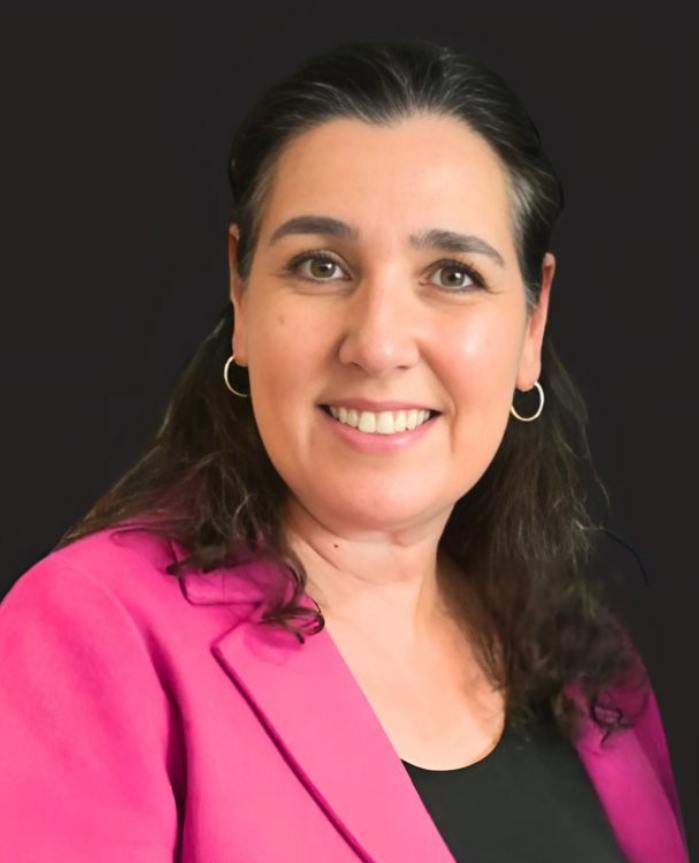
Elizabeth Myles, National Executive Director, Kidney Foundation of Canada
Six decades of progress: From certain death to hopeful possibilities
The Kidney Foundation celebrated its 60th anniversary last year, prompting me to ask Elizabeth about the good news stories in kidney health over these last six decades.
It turns out there’s plenty to celebrate. Back in 1964, kidney disease was essentially a death sentence. Dialysis was for acute treatment – not life-sustaining as it is today. Transplant science was in its infancy.
Fast-forward to 2025 and we’re seeing rays of light in a once a very dark space. At-home dialysis is a reality. A transplanted kidney can function for 20 years or more, enabling recipients to thrive not just survive. Anti-rejection medicines are growing in availability and sophistication, and new treatments include powerful drugs that can slow, and even reverse damage.
“It’s an exciting time to be doing this work,” Elizabeth says with genuine enthusiasm. “We’ve come so far, and there’s real hope on the horizon.”
The physical and emotional burden of kidney disease
But the flip side of medical progress is the many challenges that remain. It’s these that will be the focus of The Kidney Foundation’s next chapter.
Kidney disease is sneaky, offering little in the way of physical symptoms until it’s advanced. “Imagine going to hospital and learning that you’re direly unwell overnight,” says Elizabeth, emphasizing that a diagnosis this serious isn’t just about the physical reality, but also about the mental health and financial implications.
While more options are available today, dialysis is still a significant burden for those who need it. In-centre dialysis is typically three four-hour sessions each week. Not only is it time-consuming, but it’s also invasive and disruptive. Beyond this, it causes emotional distress, especially when, for most people, the diagnosis itself comes as a complete shock.
“Suddenly you’re faced with the harsh reality of your own mortality, dependent on a dialysis machine, and shouldering the mental load of a now uncertain future. This often brings on feelings of anxiety, depression, and deep grief for the life you once envisioned.”
To add insult to injury, the financial burden can also be overwhelming. “We’re seeing people diagnosed younger and younger, many in their prime earning years,” Elizabeth notes. “Between time away from work for treatment, medication costs, and transportation expenses, kidney disease can devastate a family’s financial stability.”
Finding community: The power of peer support
That’s where The Kidney Foundation’s peer support network becomes not just a source of comfort and information, but a veritable lifeline.
In recognition that one-size-doesn’t-fit-all, the organization has three different kinds on offer: one-on-one, online private forums, and virtual peer-support groups, because everyone who is diagnosed may process the news differently.
“We offer more than 200 different support groups,” Elizabeth explains, “catering to the diverse needs of those seeking support — from individuals at various stages of illness to caregivers and parents.”
The value of peer support is something I’ve seen firsthand working in the mental health space. Connecting with others who share our experiences can normalize our challenges and give us practical wisdom above and beyond clinical advice.
“There is immense reassurance in seeing others coping well,” Elizabeth adds. “It transforms the narrative from ‘my life is over’ to ‘I can still live meaningfully with this condition.’”
The gift of life: Transplantation and organ donation
While innovative medications are now available, with more under development, a kidney transplant remains the gold-standard for successful outcomes. But demand far outstrips supply.
“Did you know that 71 percent of Canadians waiting for an organ transplant are waiting for a kidney?” Elizabeth asks. “That’s thousands of people whose lives are on hold, sometimes for years, hoping for a call that might not come in time.”
Elizabeth and her team are working to create favorable conditions that support living donors – both emotionally and financially. They are advocating for changes, such as paid leave from work during recovery, to make altruism less costly for those inclined to give.
“Organ donation is the greatest gift someone can receive,” says Elizabeth, “and most Canadians support it, but sometimes, life gets in the way of people taking the step to formalize their wishes [to be a posthumous donor]. We’ve worked to create avenues that make that choice front-and-center. For example, in British Columbia, Ontario and Nunavut, it’s now possible to indicate your intentions on your income tax form.”
Given that the only two certainties in life are death and taxes, I couldn’t help but marvel at the brilliance of something so simple. In fact, the number of organ donors jumped by 2.5 million following this change.
“It just reinforces that Canadians are some of the most altruistic people in the world. The gift of life shouldn’t incur a financial cost for donors, nor should it be difficult to register your wishes in advance,” says Elizabeth.
Legacy of compassion: The Logan Boulet effect
Perhaps no single person has had a greater influence on inspiring organ donation in Canada than Logan Boulet, a young hockey player who was tragically killed in the 2018 Humboldt Broncos bus crash.
“Logan had registered as an organ donor just weeks before the accident,” Elizabeth tells me with visible emotion. “He lost his life in the crash, but he saved six others. His selfless choice inspired what we now call the ‘Logan Boulet Effect’ – tens of thousands of Canadians registering as organ donors in the weeks following his story becoming public.”
His legacy continues to shine brightly, with April 7th designated as Green Shirt Day, a testament to how one person’s compassion can change the trajectory of countless lives.
“Those six recipients and their families will carry Logan’s gift with them – and keep his memory alive,” says Elizabeth. “Until we find a cure, transplants are the best hope we have to treat kidney disease – but we can’t ignore the power of prevention.”
Prevention: The best medicine
While The Kidney Foundation strives to help those living with kidney disease today, it’s also working to prevent more people from needing lifesaving treatments in the first place.
Given the silent nature of the illness, Elizabeth and her team are pushing to have kidney function testing done at the primary care level, especially for those who have known risk factors, which can include genetics, diabetes, high blood pressure and certain medications.
“Simple blood and urine tests as part of routine health check-ups could do absolute wonders in catching and treating kidney malfunction early,” says Elizabeth. “Early intervention can dramatically slow or halt progression of the disease. We’d like to see testing for kidney problems become as common as breast cancer screening.”
In fact, shining a spotlight on kidney health is the Kidney Foundation’s goal for Kidney Health Month, because greater awareness and education can make a significant difference in enriching the quality of lives – and ultimately saving them.
“We want people in Canada to know their risk factors and to ask their healthcare providers about kidney function tests,” Elizabeth emphasizes. “Everyone should feel empowered to advocate for their own health.”
And the stakes couldn’t be higher. Current estimates indicate that over 4 million Canadians may have, or be at risk of, chronic kidney disease – without having the slightest clue.
The inseparable connection: Mental wellness and kidney health
As we wrap up our conversation, I share with Elizabeth how my work leading a collaborative on mental health and chronic disease at MHCC has shaped my understanding of the kidney health journey.
I also highlight that during our extensive conversations with HealthPartners, we’re hearing that people living with chronic disease, who also have adequate mental health support, will stick to their treatment more readily, enjoy stronger social connections, and often show improved physical outcomes.
“From our perspective at the MHCC, it isn’t an either or. It’s an ‘and’” I say.
Elizabeth nods emphatically. “We see it every day. When someone feels hopeless or overwhelmed, it can affect everything from medication adherence to their willingness to consider transplantation. That’s why we’re increasingly focused on the whole person, not just their kidneys.”
Looking ahead: A vision for the next sixty years
With 60 years under its belt, The Kidney Foundation has a strong foundation on which to build its future work.
“Our vision is unwavering – we are determined to see a future free of kidney failure, where kidney disease is prevented through early diagnosis and treatment, and where patients are well-supported throughout their journey,” she says. “We’ve made incredible strides, but we won’t stop until kidney disease no longer shortens or diminishes lives.”
It’s an ambitious goal, but after our conversation, I’m convinced The Kidney Foundation has the passion, expertise, and community to make it happen.
That little girl who once played in the backseat with her friend now understands she was a support and distraction from the complex reality of kidney disease. A disease that requires those who face it, and their families, to draw on remarkable resilience – a resiliency I still admire in my best friend, to this day.
Most importantly, I understand that supporting kidney health means supporting the whole person, mind and body together.
To learn more about kidney health, find support, or discover how you can help, visit www.kidney.ca.
This MHCC & conversation is dedicated to Allan. You live on in our memories.
If you’re in certain filter bubbles, it can feel like mental health is everywhere. “So many people are consuming mental health information, but without a critical eye,” says Jessica Ward-King a self-described fierce mental health advocate with a PhD in experimental psychology who uses the moniker The StigmaCrusher (“heavily educated and heavily medicated”). She uses online talk therapy and also finds information through TikTok and YouTube. “I consider that e-mental health too,” she says. Ward-King informs her influence with research from her doctoral studies, her lived experience with bipolar disorder, and other evidence-based sources, but this isn’t necessarily the norm for online mental health.
Technology is undoubtedly transforming the way people in Canada receive health care with countless applications, influencers, and digital tools popping up everywhere, but how does one sort through the many options?
“E-mental health services in Canada provide crucial benefits—offering anonymity, reducing stigma, and allowing people to access support in ways that work for them,” says Maureen Abbott, Director of Innovation at the Mental Health Commission of Canada. “Whether it’s the flexibility of choosing their own time and format or the ability to find help in urgent moments when in-person services are unavailable, e-mental is transforming mental health care. One individual shared with us that accessing a peer support group in the middle of the night literally saved their life,” Abbott says.

Maureen Abbott, Director of Innovation at the Mental Health Commission of Canada at the Electronic Mental Health International Collaborative (eMHIC) conference in Ottawa in September, where the strategy was launched. With countless e-mental health solutions available, clear guidelines are essential to ensure clinical quality, user safety, and data security. Photo: eMHIC.
Debra Slater is the type of person you want looking after your loved ones. A self-proclaimed born nurturer, she took care of her grandmother in Saint Vincent and the Grenadines and went to school to become a personal support worker (PSW) after moving to Canada. Slater loves talking to and learning from the older adults under her watch at a long-term care home on the outskirts of Toronto. She greets them by name, with eye contact and a smile, and strives to develop a rapport regardless of their cognitive condition. She treats clients as individuals while helping with activities of daily living – often referred to as “ADLs” in support work communities – such as bathing, getting dressed, and eating.
“You need to take time to understand their emotions and feelings,” says Slater, who has worked as a PSW on and off for more than 20 years. “You kind of become their family. They’re not ‘my patients.’ They’re people who want to be as independent as possible and this is their home. My job is to bring comfort and peace, love and companionship. It’s a whole vibe.”

Debra Slater, a personal support worker, also coordinates the Empower PSW Network to advocate for better working conditions.
Slater maintains this attitude even though, on a typical shift, she has eight residents with diverse needs to juggle. One might have had a rough night; another could be dealing with a medical issue; and if any of Slater’s colleagues are absent, she’ll probably have additional clients. “On a difficult day, you have to work harder to be present,” says Slater, reflecting on all the de-escalation and problem solving she must do. “That takes a toll. My mental health is a roller coaster.”
Many care providers are in this profession because they have similar nurturing mindsets, yet 80 percent have considered changing careers, according to a report published last year by the Canadian Centre for Caregiving Excellence (CCCE).
Across the country, PSWs, direct support professionals (DSPs) – who work with clients with disabilities – and other paid health-care attendants are feeling stressed, overworked, and underpaid. The labour pool consists largely of racialized women, many of whom are newcomers to Canada, and they face high rates of abuse and discrimination on the job.
Working in congregative living facilities and providing home care for a patchwork of public and private employers, the majority are essentially gig workers without benefits such as paid sick days or access to counselling.
Fewer than half of the PSWs surveyed by the joint University of Toronto and St. Michael’s Hospital-based Upstream Lab said their health was good or excellent, which is lower than the national average. More than 20 percent likely had some form of depressive disorder, the researchers concluded in a 2022 paper, “significantly exceeding the prevalence of major depressive episodes among Canadians.”
In a country with an aging population, this is a significant challenge. If we don’t take care of PSWs and other care providers, how can they be expected to look after our most vulnerable citizens?
Risky business
More than 650 PSWs in the Greater Toronto Area responded to the Upstream Lab survey, which found that:
- 97% are born outside Canada.
- 86% are precariously employed.
- 89% lacked paid sick days.
- 90% are women.
- Many are casual employees, with wages that range from $17 per hour in home or community care to $25 per hour in public long-term care facilities.
This snapshot is representative of care providers across the country, according to the Upstream Lab paper, and their precarity is “significantly associated with higher risk of depression.”
Health-care jobs in Canada have traditionally been secure, but over the last three decades, “disparities in pay and work conditions have grown between registered professionals (such as physicians, nurses) and other staff whose jobs are part-time, temporary, on contract and not unionized,” the researchers wrote. A national focus on discharging people from acute care and aging in place has ramped up the demand for PSWs, who now constitute about 10 percent of all health-care workers. This workforce grew relatively quickly, says Upstream Lab director Dr. Andrew Pinto, without much scrutiny or consideration of the consequences.
These poor working conditions can be detrimental to physical and mental health, says Dr. Pinto, who, in addition to his role as a public health specialist, is also a family physician. In a system that incentivizes “reducing costs” and “doing more with less,” he says that many PSWs fear reprisal from their employers if they raise concerns about problems on the job. Pinto knows this from his research, and from the PSW patients he sees as a physician. “They’re really dedicated to caring for others and take pride in their work,” he says, “but they’re not given the respect they deserve.”

Dr. Andrew Pinto: Better working conditions lead to better health outcomes. Photo by: Upstream Lab
In 2009, experienced kayakers Zac Crouse and Corey Morris were descending a rain-swollen river in Nova Scotia when Morris was swept over a waterfall and died. At the time, the men were planning a kayak expedition from Ontario to the Atlantic Ocean. Traumatized by the death of his close friend, Crouse entered therapy and began taking medication, and two years later, he embarked on a 1,500-kilometre solo journey as part of his healing.
“At a basic level, it was a physical challenge, but there were also higher-level cognitive things happening,” says Crouse, who used to work as a recreational therapist and now teaches rec therapy in a university program. “You get into a trance-like state after so many hours of paddling. Your brain is seeing patterns on the water that don’t easily fall into slots and boxes. You’ve also got the sounds and feel of the wind. There’s a calming effect,” he says.
“The repetitive motion, the exertion, all the little things you have to pay attention to in order to make progress — those create a sense of flow,” Crouse adds. “And the problems you’re solving are very basic and immediate, not future vague ones.”
Crouse’s trip provided a break from rumination and regret. It helped him recover. And although people experience and respond to trauma in different ways, his journey exemplifies the curative potential of “blue space.”
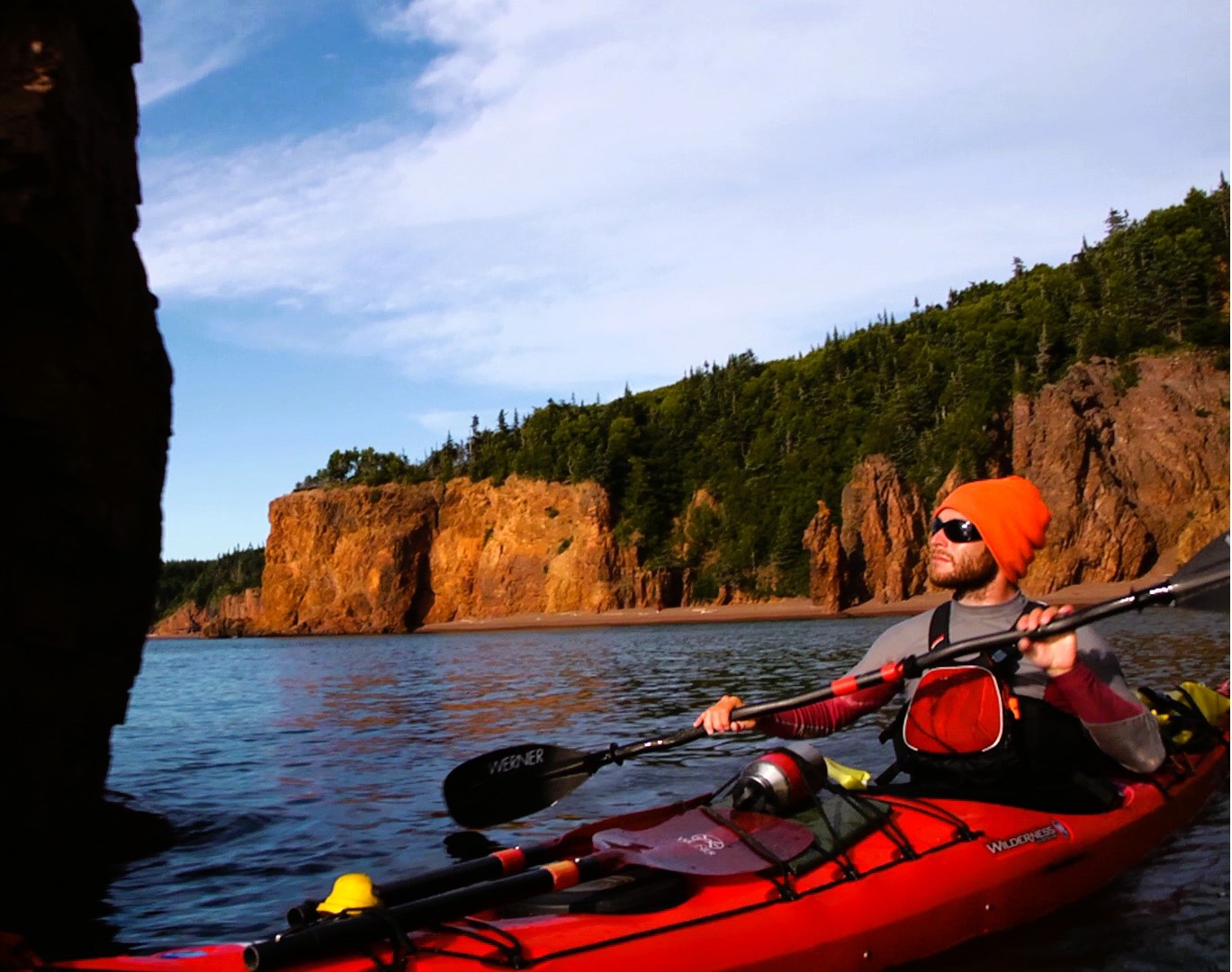
Zac Crouse teaches recreational therapy. He took a long kayak journey to help with healing after the death of his close friend, Corey Morris.
Second nature
The benefits of hanging out in nature are well-documented: lower blood pressure and stress-hormone levels, less anxiety, more self-esteem. Now, a growing body of research suggests that spending time in, on, or near water can have a more positive impact on our health than other outdoor settings. A 2022 paper, published by a pair of University of California, Davis psychology researchers, for example, concluded that even looking at a creek or pool is enough to lower blood pressure, improve heart rates, and increase relaxation among respondents, a result they attribute, in part, to the evolutionary link between successfully detecting drinking water in arid environments and stress reduction.
Aquatic environments can also be hazardous, of course. Drowning is the third-leading cause of unintentional injury death around the world, according to the U.S. Centers for Disease Control and Prevention. Flooding is among the deadliest consequences of climate change, and it tends to displace or kill those with the least capacity to escape or adapt. Yet, as a species, we have a deep-rooted biopsychological bond to this molecular combination with two parts hydrogen, one part oxygen. Over the past decade or so, researchers have begun to deconstruct the affinity we feel for water, and they are exploring how integrating blue space into our communities and lives could pay tremendous dividends.
According to environmental psychologist Jenny Roe, director of the University of Virginia’s Center for Design and Health, blue space has four triggers that activate the human parasympathetic nervous system, a network of nerves that relaxes our bodies following stressful or dangerous experiences.
First, water instills a sense of being away. It can be either tranquil or dynamic, conditions that can make you introspective or dialed in to your surroundings, both of which serve as escapes from habitual behaviour.
Second, blue space – especially large bodies of water – conjures a feeling of “extent,” of being in a boundless environment where possibilities feel limitless. Although one can also experience these glimpses of an infinite existence while, say, hiking up a mountain, they’re amplified in blue space by acts like looking to the horizon or into the depths of a lake.
Third, the sounds and sights of water — as it runs over rocks, for example, or dances in the sunlight — can spark “hard fascination,” a concentration of our focus through stimulation, and “soft fascination,” an unconscious partial capturing of our attention that requires little effort and frees the mind to roam. Both can contribute to restoration. And fourth, water confers a sense of compatibility with our location; of comfort and belonging.

Author and stand-up paddleboarder Dan Rubinstein departing from Ottawa in June 2023 at the beginning of a 2,000-kilometre journey to explore the curative potential of blue space — an expedition that formed the basis of his upcoming book, Water Borne. Photo: Lisa Gregoire.
Flow states
Another environmental psychologist, Mat White at the University of Vienna, is arguably the world’s leading authority on blue space. He studies what happens when we do anything (paddle, swim, surf, walk, sit) around any type of water, from vast oceans to urban fountains. After leading several research projects and crunching some big numbers, White has concluded that these environments provide a boost by offering increased opportunities for both stress reduction and physical activity.
For one paper, White analyzed a UK census of approximately 48 million adults and found that the closer people live to the coast, the healthier and happier they are. “The crucial point about that research was that it was the poorest communities and individuals who got the benefits,” he says, referring to both mental and physical health. “If you’re rich, it doesn’t matter how often you spend time in blue space. You’re healthy and happy anyway. But if you’re poor, it matters hugely.”
The idea that a place with specific environmental attributes can reduce socioeconomic health inequalities is called equigenesis. Rich Mitchell, a population health researcher at the University of Glasgow, coined the word after publishing a paper that suggested income-related health disparities were less pronounced in neighbourhoods with better access to nature.
The quality of blue spaces affects their therapeutic properties, according to White, as does how we interact with them. Those variables are influenced by geography as well as cognitive and cultural differences. For example, people often prefer places they visited as children, and there are dramatic differences between walking and sitting, and different outcomes depending on how close we live to a blue space and how frequently we visit. But on the whole, when we’re near water, we tend to lose track of time and be more active, and every extra minute of movement is good for our health. “The goodness isn’t just the water,” says White, explaining that people tend to enjoy quality time with one another at places like beaches because of the sense of belonging they feel. “It’s a behavioural interaction that water encourages. This is one of the reasons we think blue spaces tackle health inequalities. They’re social spaces that draw us into cross-generational play.”
New depths
The kicker to all of this, the multiplier of multipliers, is that time spent in blue space, especially by children, promotes pro-environmental behaviour, which is another way of saying “taking better care of the planet.”
One of White’s frequent collaborators, British landscape architect Simon Bell, came up with the term “blue acupuncture” — basically, adding a splash of blue space to a community to help improve public health. For example, a recent project in a low-income neighbourhood in Plymouth in southwest England transformed a small neglected beach into a launch for personal watercraft, swimming area, and park with views of the harbour. The cost was around $150,000 USD and surveys assessed the well-being of area residents before, during, and after construction. Psychological health increased, as did perceptions of community cohesion. Families played in the park, seniors sat on benches, and teenagers took forays into the sea.
What does all this have to do with Zac Crouse’s kayak journey? The common denominator is water. Paddling all day helped Crouse’s brain “catch up to reality,” he says, supplanting a traumatic experience with new memories. But even if one’s connection to blue space is more subtle — a picnic beside a pond, a sunset stroll along a river — it can provide a restorative break from the tensions of daily life. These benefits are not a panacea, but because they “apply to millions of people,” says White, “the overall public health benefit is huge.”
A confession
My conversation with Christine began with a confession.
A year and a half ago, I experienced a heart attack that came seemingly out of nowhere –despite having no known risk factors. This unexpected health challenge was a transformative experience, connecting me more deeply with the world of heart disease and mental health.
After my admission, Christine and I dove into a compelling conversation, ranging from individual responsibility to national accountability.
She began by pointing out that while there are factors over which people have some control, there are others, like my age for example, which are incontrovertible. She highlighted decisions we can take to improve our overall health and wellness, from getting good quality rest, to eating well, and exercising.
But her advice comes with a big caveat.
Uncovering inequities
“We have to remember,” she said, “these choices aren’t always available. Not everyone has the same access to affordable, nutritious food, and the time and opportunity for physical activity.”
So, while eight of every 10 cases of premature heart disease and stroke are preventable, risk factors aren’t so easily boiled down.
“Ethnicity, family history, genetics, age, sex,” Christine explained. “These are just the beginning. Where you live and your economic situation play equally critical roles in heart health.”
This insight underscores a crucial truth: social determinants of health aren’t peripheral –they’re central to understanding disease prevention and recovery.
Given her professional role, and her academic background in population health, Christine naturally views challenges through an equity lens. During our conversation, I found my own understanding of the complexities facing those living in recovery expanding well beyond my personal experience.
The sex factor
One striking revelation was the historical gender bias in medical research.
Until now, two-thirds of all heart and stroke research has focused on men. This statistic is particularly alarming given that heart disease is the number one cause of premature death among women, with many experiencing unrecognized symptoms.
To be honest, I felt left in the dark about this inequity, which disadvantages my wife and daughter.
If you want to learn more, Heart & Stroke has some great resources to help women better understand their own risks and have conversations with their healthcare providers.
It’s all part of an effort Christine and the organization are mounting to improve women’s heart and brain health through research, education, and dismantling systemic barriers.
Heart & Stroke has launched awareness campaigns featuring prominent Canadian women like television and film producer Lisa Meeches, R&B artist Deborah Cox, and actress Julie Du Page. Their stories normalize conversations about recovery and provide platforms for shared experiences.
For example, women are hit hardest by depression following stroke, as explored in Stroke and mental health: the invisible and inequitable effects on women, a report that looks at the higher risk of mental and emotional challenges women face after stroke.

Christine Faubert, Vice President, Health Equity and Mission Impact
Creating a life-saving culture
Beyond their focus on priority populations, Heart & Stroke is also a big proponent of collective action for various conditions including cardiac arrest – which is when the heart suddenly and unexpectedly stops beating.
“An individual level of awareness around medical emergencies such as cardiac arrest is a good start,” Christine noted. “But we also need a national push to build a culture of cardiac safety.”
This is echoed in an excellent piece in the Globe and Mail by Heart & Stroke CEO Doug Roth. He writes there are about 60,000 out of hospital cardiac arrests in Canada each year, and only one in 10 survive. Those that do owe their lives to a confident bystander, who quickly and ably administered CPR and had access to an automated external defibrillator (AED).
Putting your heart into it
Heart & Stroke is instrumental in upping general knowledge and competence including through programs like CardiacCrash. It’s a dramatic, team-based interactive program that teaches hands-only CPR and AED skills.
When not carrying out duties as Board Chair of the MHCC, I am the CEO of Provident10, which delivers management and oversight of the public service plan in Newfoundland and Labrador – one of Atlantic Canada’s largest public sector pension plans. In that capacity, I’ve committed to building CardiacCrash into our organization’s plans for 2025 – and I’d urge other leaders to do the same. I vowed to become re-certified in CPR this year, a promise I fulfilled in late January 2025.
“AEDs are essential life-saving devices. But we need to ensure they are registered, maintained, and people know how to use them,” said Christine.
And while public awareness and education is one side of the coin, the other is Heart & Stroke’s work in the broad category of policy change.
From policy insights to tangible progress
“We’re working to create healthier conditions across the board, because the onus shouldn’t be on the individual alone,” said Christine, who noted the death rate from heart or stroke related disease has decreased by 75 percent, largely due to concerted policy efforts.
This push has tangible impacts, from eliminating trans-fats in Canada’s food supply, to educating the public about smoking risks. Over the past several years they’ve been turning their attention to emerging health challenges like vaping and nicotine pouches.
But Heart & Stroke is also using its considerable influence to cultivate a nation-wide support network for those affected by heart disease and stroke, and their caregivers.
“We want to scale up things that work, and so we evaluated the peer-support aspect of our Facebook communities, for example – one for caregivers and one for people in recovery – and the feedback from users is tremendous.”
Heartfelt support
Heart & Stroke is extremely fortunate to have an army of supporters and volunteers willing to share their stories, dispense tips and advice, and be a listening ear for others.
This I can relate to.
The weight I felt following my own heart attack was lightened immensely through informal peer support.
And here, I would be remiss if I didn’t name names.
The MHCC’s own president and CEO, Michel Rodrigue, happened to be diagnosed with prostate cancer only weeks after I’d had open heart surgery. This shared experience of ill health threw us together in an intimate and unexpected way.
I described it to Christine as, “Close enough, yet far enough away.” We were able to unburden ourselves to each other, in a way that would have felt too heavy to offload onto our spouses or loved ones.
I said, “It reminded me, yet again, that our brains and our bodies aren’t separate entities.”
To that end, I was interested to learn about a program Heart & Stroke is funding to tackle the emotional impacts of stroke. Dr. Swati Mehta, a psychotherapist at St. Joseph’s Healthcare London’s Parkwood Institute, has developed a 10-week self-directed course that teaches people how to cope in the face of an altered reality.
Drawing on community engagement and the principles of cognitive behavioural therapy, it’s a stepping stone to help people manage their emotional well-being after stroke.
And it’s the kind of approach we should be taking across the board – a beautiful segue to the final question I put to Christine.
A Valentine’s Day wish
As we prepare to mark Valentine’s Day, which has taken on new meaning since my own experience, I expressed that my wish wasn’t for chocolates or a fancy heart-healthy dinner (though that would be nice!) but rather to see a healthcare system that embeds mental health across chronic disease management and major illness recovery, just as Dr. Mehta is doing.
Christine responded in kind.
“I’d like to unwrap new knowledge to better understand what barriers are preventing people from making the best recovery possible or living the best lives they can with a heart condition or stroke. I’d like to see greater access to education, resources, and supports as people navigate a complex and imperfect system. And, of course, my ongoing wish is to put patients at the heart of every aspect of healthcare.”
These are themes that are explored in a report Heart & Stroke just released on congenital heart disease to mark Heart Month.
Interestingly, my own experience has slowly proven to be one of transformation.
And it’s happened from the inside out.
What I once thought of as vulnerability has become a source of strength.
I’ve allowed a private experience to become a public call to action.
And I’ve gained a deep empathy for those battling a health challenge – be it heart disease, mental illness, or both – who don’t have the same resources, access, and choices that I do.
This awareness has sparked a renewed conviction that with privilege comes responsibility.
To that end, I offered to lend my voice as a survivor of heart disease – and as a mental health advocate – in support of Heart & Stroke.
Because we all contain multitudes.
And there is still so much work to do.
To get involved yourself, or to find supportive services and resources, visit www.heartandstroke.ca.
The Book Club series profiles good reads that challenge stereotypes and stigmas.
I imagine Jonathan Stea has an “I Heart the Scientific Method” fridge magnet because his book, at times, has the ring of your high school science teacher trying to drum up enthusiasm for the concept to a tough crowd. Eventually it may land.
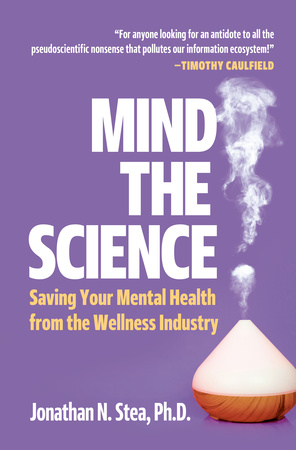
Mind The Science
Stea comes by it honestly. He is an adjunct assistant professor in the department of psychology at the University of Calgary and a full-time practicing clinical psychologist. He frequently takes to social media to debunk myths and correct facts. (Sometimes his mom even hops online to take on the trolls).
He writes for a lay audience with nuance, avoiding finger-wagging or dumbing-down tones. Stea offers compelling stories along with an overview of how to evaluate research and explains the importance of assessment, testing, peer-review, and various research methods. It’s solid information.
Except that he is battling a tide of speedy hot takes in our online world – a vast hyper-verse of snake oil-type claims from innumerable self-appointed “experts” in physical and mental health, celebrity endorsers, and others that cluster under the all-encompassing nebulous term “wellness.” It’s a vast and largely unregulated domain where many an influencer can hang up their shingle and freely offer tips that can range from cutesy to deadly.
Is it all bad? No. For example, you can shell over good money for a menu plan that aligns with the season and sounds vaguely spiritual. It likely tastes great and offers a cozy kind of comfort, but then there are more grim cases like that of Kirby Brown who attended a “Spiritual Warrior” retreat in Arizona. In 2009, Brown and two other participants died in the final activity of the retreat, a poor imitation of a Native American “sweat lodge.” Twenty other participants were taken to local hospitals.
Consumer safety
The Brown family focused their grief into an organization called SEEK Safely, designed to educate the public about the potential harms of the wellness industry, provide consumer information, and promote safety and accountability. Stea details their story in the book subtitled, “Saving Your Mental Health from the Wellness Industry.”
What might we need saving from? Well, it depends. Stea writes with humility about humanity – recognizing our contradictions, flaws, and changing circumstances. He shares his personal experience of caring for a loved one, grappling with the frustration of ineffective treatments. As a young person, he felt bewildered by science’s limitations. How is it that something capable of sending a man to the moon could also leave those closest to you in “a fog of health uncertainty”? he asks.
As a fellow mere mortal who will eventually fall sick, Stea wonders what he might do in the future. “Will I reach for the healing crystals? Maybe. Desperation is intoxicating.”
That vulnerability in moments of crisis can leave people open to being exploited at a time when they may be seeking growth, deeper meaning, connection, and a soft place to land in a world that is chaotic and confusing. Moreover, ineffective treatments can produce harm, drain your pocket, and erode trust in scientific foundations. At the same time, Stea notes, some wellness treatments may provide coziness and a sense of warmth in a fragmented healthcare system that may not have time for comfort or calm bedside manners. It’s a matter of knowing the difference.

More than just fluff: Is your therapist real or a feline? The case of George the Cat illustrates the importance of understanding how wellness practitioners are regulated in your jurisdiction.
Stea seems hopeful and offers faith in people’s capacity to sort through piles of information. I try to share that view, but more often I wonder about our ability to constantly evaluate the material coming at us in order to make informed decisions.
Do most people, moving through life at breakneck speed, pause to reflect on their “favourite” thinking errors and logical fallacies? I am fond of self-awareness, but not everyone may have it at all times, or in moments of heated exchange, the kinds that are perpetuated by online interactions and algorithms.
The key is to develop it. “This awareness is our friend when trying to figure out the legitimacy of particular mental health-related assessments, diagnoses, and treatments,” Stea writes. In addition to quantitative and qualitative scientific methods, Stea talks about Indigenous ways of knowing as something not to be co-opted as well as the value of lived experiences, where people share subjective takes on their lives, events, and ideas.
Things to watch for
Stea offers helpful tips for developing science literacy, and includes a lay overview of randomized control trials, and other evidence-based processes. He warns of pseudo-clinical jargon that masquerades as science but does not adhere to research methods. A key flag – the evasion of peer-reviewed studies.
“Science is a self-criticizing machine,” he says. “Peer review essentially involves having experts in a scientific field grade each other’s work and decide if it passes or fails,” he explains. “People who promote pseudoscience are experts at dodging the peer review process. They will either avoid it entirely or self-publish on blogs, websites, newsletters, or social media. They will claim that their pet theories cannot adequately be tested with current scientific methods, or they will claim that the ‘scientific establishment’ is biased against them,” he writes.
Stea demystifies the concept of science overall, noting that it’s something to regard as a tool or process and not something to believe in, he says. “Science isn’t a God. Or a unicorn.”
Healthy skepticism
To stem the tide, Stea offers an easy-to-implement practice – tame your search bar. Essentially, he explains, it is like going to the grocery store and avoiding impulse buys. The key: Go with a list. “Why are you looking online? Knowing what you need – such as ways to improve your health or a therapist – can keep you out of rabbit holes,” he says.
Thinking critically about information is a helpful skill when navigating an overwhelming online landscape and if you need a reminder, you can make George the Cat your screensaver. The domestic orange-and-white housecat was registered as a hypnotherapist with three UK industry bodies by a BBC journalist, exposing the flaws of certification and credentials. This example, while amusing, can serve as shorthand. “We all fall for fake science news at times to varying degrees, and it’s easier in hindsight to see what went wrong,” Stea writes.
Learning from those errors and developing media and scientific literacy can offer a sense of structure and control, as fake science news continues to perpetuate.
