
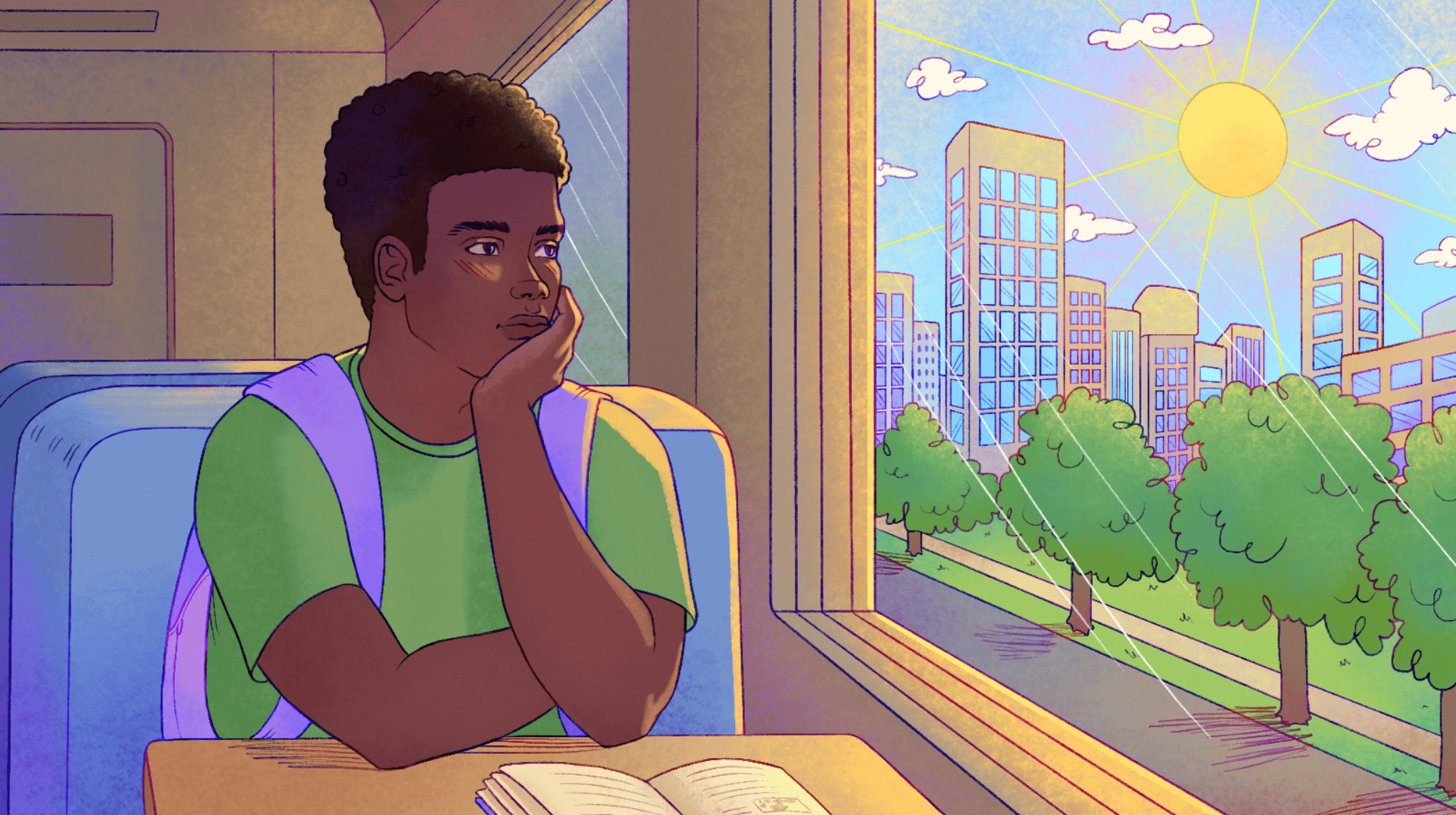
Isaiah Neil was a varsity football player at the University of Alberta when he began experiencing what he now knows, at age 24, was extreme symptoms of an anxiety disorder. “My body would start to feel numb. I’d have heart palpitations and racing thoughts that completely debilitated my focus,” says Neil, now a youth mental health leader. Eventually, he would have “over dozens of fainting episodes” due to anxiety. He had no idea that his fear of failure in the classroom and on the field was the source of his paralyzing anxiety. After seeking support from coaches, therapists, and doctors and failing to find solutions, he survived a suicide attempt that ended his 14-year football career. It was the beginning of a new career path. He shifted his focus to youth mental health advocacy, policy, and research.
Today, with ongoing support, he has learned to navigate anxiety and now often finds himself on stage in front of hundreds of youth. Using the ancient practice of storytelling, he’s now educating the next generation on mental health and resilience and inspiring them. “Today is better than yesterday but today is never perfect,” he says. “I still struggle, but now I have shifted to a growth mindset. Adversity will always be part of life. The only way we fail is if we choose to give up.”

Isaiah Neil
That is an inspiring and hopeful message for the growing number of young people in Canada and around the world who, according to numerous studies and reports, experience levels of anxiety that affect their ability to enjoy normal activities and build healthy relationships. As Neil’s experience attests, untreated anxiety can lead to physical symptoms, phobias, depression, and avoidance behaviour that interfere with daily life and goals. Eventually, it can lead to suicidal ideation.
These are serious concerns that need to be urgently addressed, say mental health experts. Among the key findings of “A Generation at Risk: The State of Youth Mental Health in Canada,” a 2024 report commissioned by Bell’s Let’s Talk campaign, “Youth mental health is in serious decline, with increasing rates of anxiety, depression, and suicidal ideation. [It is] a disturbing trend that is particularly pronounced among marginalized groups such as 2SLGBTQI+ communities, newcomers, and Indigenous youth.”
The report was produced in collaboration with numerous organizations grappling with the impact of the trend, including Kids Help Phone, Jack.org, Aire Ouverte, the National Association of Friendship Centres, Youth Wellness Hubs, and the Youth in Mind Foundation.
Across the country, social service organizations, health-care providers, and families are trying to respond, often with limited resources, to the growing problems young people are facing.
“We absolutely see an increase in anxiety, and anxiety is almost always accompanied by other mental health issues, substance use, or other social determinants of health,” says Cynthia Peacock, director of mental health services at the Youth Services Bureau of Ottawa (YSB), which offers a variety of mental health services, including a walk-in clinic, youth and family counselling, and a 24/7 crisis line. Organizations like YSB are trying to stretch their services to meet the increased demand and find ways to prevent mental health issues from becoming critical. “Of course, call us when you’re in crisis. But we really want to see youth when there is just an inkling of discomfort. We don’t need to wait until things are at the pinnacle of distress. We can offer support before that.”
Why are increasing numbers of young people in Canada feeling so anxious?
While each individual faces unique issues, mental health experts point to several social and cultural trends fuelling emotional troubles for young people.
- Increased isolation: The pandemic affected young people when they were learning critical skills such as how to socialize and make lasting friendships. “The isolation and uncertainty caused by lockdowns and social distancing measures exacerbated feelings of loneliness and anxiety,” write B.C. authors Matin Moradkhan and Saba Vatanpour, on behalf of the Let’s Talk Mental Health Foundation, in their UNICEF Canada article “Youth Mental Health Crisis: The Pandemic Fallout.”
- Screen time versus in-person connection: “A Generation at Risk” reports that “youth with high personal screen time (6+ hours daily) are 2.35 times more likely to experience suicidal ideation (34% vs. 14%), alcohol dependency (12% vs. 6%), and cannabis dependency (18% vs. 6%). High screen time also correlates with a 2.5 times higher rate of self-rated anxiety (28% vs. 12%) and severe mental health symptoms.” Self-esteem and body image issues, especially for young women, may also result from spending time online looking at altered, unrealistic images of others.
- Stigma and marginalization: Another concerning report finding was that over half of the youth who reached out for help with their mental health identified as 2SLGBTQI+. Additionally, 10% identified as Indigenous (vs. 5% of the overall population), and 6% identified as Black (vs. 4% of the overall population).
- Young newcomers to Canada: Many reported feeling isolated, haunted by past trauma and racism, and reluctant to seek help for fear of being misunderstood.
- Climate change anxiety: Fifty per cent of young people stated that climate change issues had had a negative effect on their mental health.
- AI and anxiety: While AI can be useful when used ethically, it is already having a negative impact on mental health. Young people are particularly vulnerable. Lawsuits allege that young people were influenced to end their own lives through disturbing AI manipulation.
Trouble finding help
Youth who participated in the report spoke of the difficulty they had finding appropriate, affordable, and available services to address issues like debilitating anxiety. Wait times of four weeks or even months were unhelpful when their issues were acute. They also pointed to the problem of “frequent rotation of counsellors,” and students worried about where they would find affordable help after they graduated.
These concerns are among the main issues addressed by the Commission’s National Standard for Mental Health and Well-Being for Post-Secondary Students. The goal is to help post-secondary institutions provide the best possible mental health supports for their students, from positive classroom environments to reduced wait times for counselling.
Beyond post-secondary institutions, experts say that the mental health care system needs radical changes to effectively serve young people. Problems identified in “A Generation at Risk” include widespread government underfunding for mental health services and a lack of coordination among care providers.
To truly address youth mental health issues, say organizations like YSB and those behind the “A Generation at Risk” report, federal and provincial governments need to focus on increasing mental health literacy, prevention, and early intervention to help young people recognize problems and get the help they need before they are in crisis.

Cynthia Peacock
“We need to take a harm reduction approach to mental health,” says Peacock. “We can intervene early and stabilize the young person, so we avoid those peak heightened moments.”
Parents play a critical role in supporting their children as they deal with mental health issues. But finding the right help in a complex system can be confusing. Peacock points to initiatives like 1Call1Click, a collaboration between YSB and the Children’s Hospital of Eastern Ontario (CHEO), which simplify the process of connecting to services when people are in distress and navigating unfamiliar territory.
Self-help
When a young person is feeling lonely and overwhelmed by anxiety, whatever the source, it’s important to “speak out, tell someone,” says Neil. “You cannot attempt to solve any problem without first verbalizing it and describing its challenges. Speaking about your mental health in itself can help alleviate some pressure.” Neil strongly believes in the power of storytelling and one-on-one connections to help break through isolation. He is the founder and speaker of Blue Shoes, a brand and message named for the story of the coach who gave him a pair of blue sneakers that gave him hope at a time when he had no hope to live. It’s a powerful message that he hopes will remind people that “it only takes a moment to support someone struggling with their mental health.”
Mental health providers agree. “Make contact with others,” says Peacock. “It’s so easy for this online generation to isolate. Find your people — not on the computer.” Stop doomscrolling and cultivate friendships and activities offline. Remember, it’s okay to reach out for help with uncomfortable feelings. Don’t wait until there’s a crisis.
