
Share This Catalyst


With stigmatizing language, things can get pretty cloudy
This article is part of the Catalyst series called Language Matters.
“I hate this weather, it’s so bipolar. One minute it’s sunny and the next it’s raining. I never know how to dress in the morning.” I roll my eyes at my friend, and she apologizes. “I’m sorry. I forgot.” She’s not the first to use my diagnosis to describe something negative, and she won’t be the last, but it stings every time.
Adopting clinical terminology to emphasize our experiences happens all the time. How often have you heard someone say they’re OCD when they really mean they’re organized or respond to a new story with “That’s so crazy! That’s insane!”? We’ve all heard such things (or even said them ourselves). But just because something is familiar doesn’t make it OK. Using that kind of hyperbole reduces mental illness while doing a disservice to the people who live with those concerns. It also affects how we think about mental health conditions.
It’s called associative activation, and it happens when we unconsciously attach an emotion to an idea. Usually, the process is so quick that we’re not even aware we’re making a link. Yet our brains are hard at work producing a response to the words we use and hear. When my friend is talking about the weather, she’s also associating a negative emotion with bipolar disorder. It sounds innocent enough, but it has a lasting effect. And it’s one of the ways stigmatizing language is able to flourish.
So what’s the big deal? No need to be such a stickler. They’re just words.
Actually, those words do have a big impact on people. Think of a time when someone said something hurtful to you. How did it made you feel? For those living with mental health concerns, it can be disappointing to learn that someone you thought of as an ally has unconsciously held negative feelings about your condition. It can also be frustrating to hear your diagnosis being reduced for the sake of a quip or to exaggerate a point. Of course, anyone within earshot of that conversation about the weather is likewise forming their own negative views about bipolar disorder. What might their reaction be if they or someone they love is diagnosed a mental health condition?

Language is constantly evolving as we understand more about mental health and strive to do better. While it can be difficult to keep track of shifting ideas around acceptable language, it’s certainly possible. A good place to start is to learn about stigmatizing language and some of the available alternatives.
Another thing to remember is to try not to get defensive if someone asks you to adjust your language. It probably just means they care enough to want to keep you from making the same mistake again. Many of us instinctively resist the idea of removing language from our vocabulary, but it does get easier with practice. And since choosing other words is one of the simplest ways that we can all help reduce mental health stigma, it’s worth the effort.
My friend and I put our umbrellas away. The sun was now peeking out from behind the clouds and warming our faces. “What I meant to say is that the weather is unpredictable these days. I should have worded it differently. I spoke without thinking. I’ll do better next time.” And for a long time now, that’s a promise she has kept.
Find other articles in the series: Person-first language.
Share This Catalyst
Belgian singer Stromae — whose European hits meld weighty themes with clubby beats — touches on the complexities of mental health on his recent album, Multitude. Ahead of his North American tour, Florence K — CBC Music host, singer, author of three books on mental health, and PhD candidate in neuropsychology — looks at its lyrics and layers.
We read it everywhere. We see it everywhere. We say it everywhere. There’s no place for shame or guilt when mental suffering knocks on our door and no valid reason to maintain stigma around mental health. It took a lot of speeches, awareness campaigns, expert testimonials, and hashtags to spread that message until it became loud and clear and to make inroads into social norms still enclosed by taboos.
This work has taken decades.
Yet in one song — in just a few sentences — Stromae challenges an entire generation, and he needn’t say more. A loose translation of the lyrics from “L’Enfer” (Hell) is at once hard-hitting and spare:
I’m not alone…To say that many others have already thought about it, but still, I feel alone…As a result, I sometimes have suicidal thoughts and I’m not very proud of it…These thoughts that make my life hell. —
While words are his craft, Stromae is a man of very few. His raps are slow, and he never crams syllables into the same verse. The effect is like an underline — his words stand out and paint precise images that linger and stick in your mind — you can’t unsee them.
Pretty pictures aside, there’s also plenty of straight talk throughout the album. On the same track, Stromae steps out from behind the metaphors to discuss his mental health challenges and the sense of shame that would wash over him, despite his best efforts to be vocal and challenge stigmas.
The echo of this refrain has resonated in millions of hearts, validating the suffering many of us feel. In this chorus, listeners have a chance to step away from solitude and feel, for a moment, less alone. How many have asked themselves, “If Stromae suffers from depression, maybe I’m not the only one? Maybe I shouldn’t feel so bad?”

Florence Khoriaty
It’s an important message because, even after decades of work, depression is still too often seen as a sign of laziness or weakness. Yet nothing could be further from the truth (Stromae’s prolific career is shorthand for that). Research shows that depression is a mental health disorder whose causes involve biopsychosocial interactions with complex mechanisms — neurophysiological, genetic, psychological, and environmental — that factor into each individual’s unique situation.
In opening up about his experiences, Stromae is declaring that a mental health disorder is not a choice and not something that discriminates by socio-economic class, by education level, by the contents of one’s wallet, or by one’s success. There’s a side effect to these words, set to endlessly catchy music; namely, that it reaches people differently than a public service campaign. That’s the magic of the album. And he advances the cause in leaps and bounds without a commercial tinge. The songs and lyrics have nuances and textures as real as the vicissitudes of life in all its rich complexities.
The full range
As with “L’Enfer,” the album’s other tracks are forthright accounts of the state of our society. It brings to mind the words of the rap group N.W.A., who said, “Our raps are documentary. We don’t take sides.” In that sense, Stromae’s album also avoids simple polarities with an honest portrait that isn’t couched in toxic positivity or end-of-the-world pessimism. Nor does he seek to be a standard-bearer for a particular disease or social cause or claim to be The Defender of All Those Who Suffer. Still, his lyrics have teeth.
In “Déclaration,” he denounces the hypocrisy of those who pride themselves on being fashionable feminists, while true progress continues to elude society. Stromae’s sarcasm belies a benevolence that serves as a through-line on the album. You hear the compassion clearly on the track “Santé” (Health), a celebratory toast to the disregarded: pilots, nurses, long-haul truck drivers, flight attendants, fishers, and bakers — along with professional insomniacs and “those who do not have the heart for celebrations.”
Let’s celebrate those who don’t celebrate themselves. A toast to the heroes of the worst times. —
In “La Solassitude” (which combines loneliness and lassitude), he explores the ups and downs of romantic relationships and the with-or-without-you challenge of maintaining a quality couplehood. He also looks at real solitude — that inner emptiness that follows you like a shadow and is seemingly inescapable no matter the surroundings.
In expressing the maudlin dark sides next to life’s more luminous moments, Stromae avoids easy divisions of “good” and “bad.” Yet he offers a winking reference to black-and-white thinking in two songs artfully sequenced toward the album’s end: “Mauvaise journée” (Bad Day) and “Bonne journée” (Good Day). Back to back, they express wry and poignant lyrics where listeners will likely recognize themselves in one way or another. They do so because we all have our ups and downs, just like we all experience a multitude of states of mind and see our lives from different angles as our perspectives evolve and shift. As Stromae reminds us of this, his album has a uniting effect. It reaches out to those who may need to hear that they’re not the only ones suffering in this giant universe, where we’re all just trying to get by.
The North American leg of Stromae’s tour starts October 21 in Vancouver.
Share This Catalyst
Is there a right way to grieve—and for how long? Bereavement in the age of COVID is getting a re-think.
Ms. B, age 65, has been feeling intense grief after her husband died of a heart attack. Not only is she tearful when remembering how wonderful he was, she avoids specific reminders of him (pictures, places they visited) to prevent even deeper bouts of misery. She is also angry that he died and has recurring thoughts about mistakes she believes his doctor made. In addition, she feels that the church she belongs to can no longer help, since no one can bring her husband back, and often forgets to take her hypertension medication, even though she knows that doing so is dangerous.
Would you consider what Ms. B is going through normal or something to be treated by psychotherapy or medication? Would your answer depend on how long it’s been since she lost her husband?
Since March 2022, as the pandemic’s third wave was setting in, those questions started to hit home with clinicians for the first time. Why? Because it was then that the American Psychiatric Association (APA) officially placed death-related grief into the realm of pathology with its latest revision of the Diagnostic and Statistical Manual of Mental Disorders (DSM-5-TR).
Let’s think about what that means. The DSM is the authority for diagnoses and research on mental disorders in Canada, the U.S., and Australia. Ever since it published the DSM-III in 1980, it has adopted a biomedical-brain disease model, directing psychiatrists and clinical psychologists to see mental disorders in terms of symptoms and illnesses, much like a physician diagnoses physical ailments. Despite the fact that scientists have yet to find “a biological cause of . . . any mental disorder,” it would be difficult to overstate the sway of the DSM’s classifications and diagnostic categories on the way clinicians treat people who come to them for help.
12 million people
Before looking at the APA’s reasons for including death-related grief in the DSM-5-TR — under the name prolonged grief disorder (PGD) — let’s first consider its possible effects in light of COVID-19. The international toll of COVID-19 deaths in September 2022, according to data from Johns Hopkins University, was nearly 6.5 million. With each loss affecting about nine others, (the reverberating effect is known as “bereavement multipliers”), we can expect almost 60 million people to have experienced death-related grief as a result of the virus.
That 6.5 million number is staggering enough in normal times. But restrictions in care facilities, hospitals, and indoor gatherings have made both the usual physical closeness during a loved one’s imminent demise as well as bereavement rituals difficult or impossible. Such isolation has surely added an even greater burden for those left behind in terms of dealing with their loss. The APA itself has said as much, estimating that the usual rate (5-10%) of the more intense and longer grief found in PGD may double in the pandemic context at 20 per cent.
With some fast math, we could estimate PGD afflictions at 12 million people worldwide.
No matter what the final number turns out to be, the pandemic has become doubly relevant to the normalcy or pathology of grief. Given that short-term psychotherapy is currently “the treatment of choice,” the decision to enshrine PGD into the DSM-5 as a psychiatric disorder has and will put unprecedented demands on already overburdened mental health professionals.
Cultural complications
The APA considers PGD a type of trauma- and stressor-related disorder characterized by “intense yearning or longing for the deceased (often with intense sorrow and emotional pain), and preoccupation with thoughts or memories of the deceased.” Because in “normal” grief these experiences generally lose their force over time (6 to 12 months), it says that PGD can be deemed to occur when “the duration of the person’s bereavement “exceeds expected social, cultural or religious norms.” In other words, clinicians should only consider grief symptoms as pathological (that is, subject to diagnosis and treatment) after this period of “expected norms” has run its course.
But will they? Putting such weight on a clinician’s judgment about social, cultural, and religious norms has certainly raised questions. One concern relates to applying a universal secular standard to norms which themselves contain values about healthy and unhealthy grief. Kaori Wada, a registered psychologist and the director of training at the University of Calgary’s counselling psychology program, points to a study involving Canadian undergraduates, which found that religious women participants with experience of bereavement were more likely to see the same grief responses the DSM now deems pathological as healthy.
A second issue is the APA’s adoption of a “normal grief period” in relation to social, cultural, and religious norms. This is something Harvard psychiatrist and medical anthropologist Arthur Kleinman questioned in the Lancet as the DSM-5 was being prepared. As he pointed out, “there is no conclusive scientific evidence to show what a normal length of bereavement is. Across the world, societies differ in what they regard as normal grief.”
Wada likewise stresses the newness of the DSM-5-TR’s “too much for too long” criterion, which is at odds with many cultures and expectations; for instance, those that see honour and moral depth in deliberate, enduring grief and emotional pain. She therefore thinks we should recognize the important shift that happens when we begin to fit what was once “understood outside medical language into a treatable disorder, [using a] ‘diagnose and treat’ logic.” By doing so, she argues, the DSM-5-TR “officializes [the idea] that if you’re grieving too long or too intensely, then you have a mental disorder.”
Wada’s concerns extend to the social, cultural, and religious norms designed to restrain the assessment and treatment of PGD. For her, not only are these norms diverse and complex, they are often far-removed from a psychiatrist’s or therapist’s expertise. In her view, the APA’s instruction to apply them puts a “tremendous amount of weight on the clinician’s shoulders.” And since most people in Canada rely on (short visits to) primary care physicians to address their mental health needs, she doubts whether such assessments are likely to be used very much in practice.
What can we expect when clinicians fail in this task of assessment or else ignore it because they feel ill-prepared? The most likely result would be the erasure of any grace period before recommending therapeutic interventions or dispensing medications.
Take this pill and . . .
While no pharmaceutical treatments for grief have been approved, the research traffic light is blinking bright green. That’s because, when the DSM-5-TR established PGD, the APA also changed complicated grief — a previous diagnostic category left out of the DSM-IV due to insufficient evidence and concerns about overdiagnosis — into persistent complex bereavement disorder (PCBD). While doing so, it also defined PCBD as a condition for further study (rather than a disorder in its own right). Thanks to that change, opportunities for new research were endorsed, including studies to establish medications for PGD.
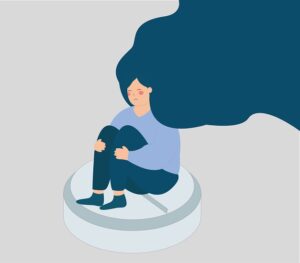
So far, the leading candidate is naltrexone, currently being used to treat opioid and alcohol use disorders. A number of experts have found this opioid antagonist choice surprising. Indeed, the basis for considering it is the theory that PGD is an addictive condition — in this case, addiction to grief itself. So, as with opioids and alcohol, the purpose of naltrexone is to reduce the grieving person’s connection to the deceased. But since this medication does not discriminate which social connections are affected, psychologists have argued that it’s a mistake to reduce those ties at a time when relations to others are so important. They also emphasize that the pharmacological approach itself neglects the context involved in grief; for instance, the grieving person’s relationship to the deceased, the qualities of that relationship, and the kind of death involved (e.g., natural or unexpected).
Donna Schuurman, who is an expert with years of experience dealing with grief in children, youth, and families in connection with unnatural deaths, offers a less reserved critique, seeing efforts to develop a “grief pill” as entirely removed from the human context: “If you yearn or pine too long for your dead child, partner, spouse, or friend, you may be addicted to grief, according to the new revision of the DSM.” As it turns out, the road that has led to the possibility of a grief pill — while paved with good intentions — includes a rather dramatic shift. But to see it requires a bit of context.
A key element to support the DSM-5-TR’s new position on grief is the role played by major depressive disorder (MDD). MDD was initially distinguished from grief in the 1990s through the work of Holly Prigerson, then a professor at the Harvard department of psychiatry. After noticing the difficulty certain people had in resolving their death-related grief, she and others began arguing that this situation called for a new disorder. The point is that the initial justification for what was to become PGD was the discovery of grief symptoms thought to be distinct from those of MDD.
Remember Ms. B from our opening description? Her case was included in a 2010 paper by Prigerson’s colleagues as a way to offer insight into this distinction, since Ms. B’s mood symptoms failed to meet the criteria for MDD (as did her behaviours for post-traumatic stress disorder [PTSD]).
Yet Wada believes that an argument against overmedication — which Prigerson and her colleagues originally put forward to justify the separation of grief from MDD — has now fallen away. One of their key rationales for this distinction was to “spare [people] from being wrongfully medicated.” But today, with PCBD becoming a condition for further study, some of those same MDD medications that were ineffective for grief are being considered as potential solutions for PGD. While Prigerson herself agrees that antidepressants have not been effective for grief, she thinks it’s important to continue learning more about grief in psychiatric terms to help people in such pain.
The way ahead
Supporters of using medications (perhaps alongside therapy) for those diagnosed with PGD insist that “no one wants to medicalize a normal, adaptive process.” Still, a clinician’s assessment of social, cultural, and religious norms as the sole constraint does not inspire confidence that such an aspiration can be achieved. Nor does the DSM-5’s contentious removal of the “bereavement exclusion” from the DSM-IV — which at least provided a two-month grace period before clinicians were supposed to consider symptoms during death-related grief as major depression. Although these shifts occurred in the name of relieving suffering and concerns over the risk of overlooking such depression, Wada points out that the act of “establishing a disorder category enables, even stimulates, further research into pharmacological interventions.”
While, at the policy level, the crux of the debate may rest on values related to the overuse of medication, the path the DSM-5-TR has cleared for the development of a grief pill is hard to deny. No matter where the APA’s new conception of grief takes us, in light of the millions of vulnerable people experiencing longer and more intense grief due to COVID (or the next mass trauma), this new diagnostic landscape will no doubt itself receive longer and more intense scrutiny.

William Wahl
Share This Catalyst
Activating an entire school community (parents, peers, education workers) can reduce the nefarious long-term impacts of bullying — a look at promising models to create kinder environments for kids
Bullying, including cyberbullying, is a growing and worrisome epidemic. Not only have one in three children been bullied at some point in their lives, the long-term impact on young people and adults can be life changing. An increasing body of evidence points to its detrimental effects on people’s mental and physical health. Studies also show that there can be lasting impacts in terms of future social and financial outcomes.
“It’s part of life”
Contrary to lingering social attitudes, we now know that bullying is not just an inevitable part of growing up or a harmless rite of passage. Bullied children and adolescents have a much higher risk of developing psychosomatic symptoms than those who escape it. Commonly reported problems linked to bullying include poor health, loss of appetite, sleep disturbances, headaches, abdominal pain, breathing difficulties, and fatigue.
For Eric, it started in elementary school, where the bullies targeting him kept up a relentless campaign of abuse. Its effects, he recalled, included anxiety, headaches, nausea, weight loss, and the absolute erosion of his self-worth. But those weren’t Eric’s only worries. After two years, with no hope in sight, he had reached his breaking point: “I didn’t care whether I lived or died,” he said. His family, desperate to find help, turned to a psychiatrist, who took Eric out of school and put him into intensive treatment. Thankfully, after some time, things turned around for him. In fact, he ended up becoming a kind of champion of the underdog among his peers. Today, Eric describes himself as “lucky.”
A young person being bullied can feel isolated, have trouble trusting people, and lack quality friendships. Should they end up believing that they can’t do anything to change their situation, they may stop trying. This feeling of defeat can also lead to hopelessness and a conviction that there’s no way out, often because they think telling someone won’t change anything. They might also prefer to suffer silently rather than risk escalation or imagine that the bullying will eventually end if they just keep quiet.
As bullied young people become adults, they may continue to struggle with relationships and avoid social interactions. Difficulties with self-esteem and trusting others can undermine significant personal relationships as well as their social and work lives. Victims of bullying also have a greater risk of emotional disorders in adulthood, including depressive and anxiety disorders, panic disorder, generalized anxiety, and suicide.
“There is clear evidence that a wide range of childhood adversity has long-term negative effects on both mental and physical health,” said Dr. Keith Dobson, a professor of clinical psychology at the University of Calgary. “Further, the emerging literature demonstrates a strong linkage between bullying and later depression and other health problems.”
Role modelling
Why does bullying still happen? Many experts point to the lack of a systematic approach to tackling the problem in schools. For a long time, it was left to teachers to address bullying behaviours — and for that to happen they would have had to witness it. Beyond that, the responsibility for reporting the problem was often left to the student, which meant that much of it was never reported.

Enter proactive bullying prevention.
The research on anti-bullying interventions is extensive, with numerous school-based programs having been evaluated scientifically. Some, like the KiVa program in Finland, focus on mobilizing the bystanders who witness bullying. These work through the power of peer responses to inhibit or fuel such behaviour.
Other programs seek instead to actively create a kinder school environment. The most prominent of these, the Olweus Bullying Prevention Program, is also one of the most widely tested. Developed by the late Swedish-Norwegian psychologist, Dan Olweus, it’s rooted in the idea that bullying is often the product of a wider culture’s tolerance toward victimization. On that basis, it tackles bullying from the perspective of a school’s entire ecosystem.
Olweus therefore works by changing the social climate around bullying: raising awareness among students, adopting anti-bullying norms, and having teachers clearly communicate their anti-bullying attitudes. But it also goes beyond the student-teacher dynamic. Every adult in the school gets basic training about bullying — not just educators and administrators — but cafeteria staff members, bus drivers, custodians, and others.
The program is effective when all these adults function as positive role models, reinforce good behaviours, and refuse to allow victimization. As part of this process, clear expectations are set for acceptable behaviour, as are the consequences of failing to abide by them. In ending their support for the culture of secrecy around bullying, each person helps to create an environment where reporting it is appropriate and expected. When saying no to bullying becomes everyone’s responsibility, it is soon ingrained in a school’s culture.
The research strongly supports the success of whole-school programs to decrease bullying behaviours. In fact, a recent study of 69 randomized clinical trials concluded that such interventions not only reduce the incidence of bullying and victimization but also improve the mental health of students.
A kinder community
When parents commit to the prevention of bullying, especially if they actively participate, a school program will be more successful. Parents can set a good example by getting involved, raising awareness, and supporting anti-bullying measures.
But since bullying is not confined to school corridors and the playground, and not all children who are bullied ask for help, parents and caregivers should also be on the lookout for warning signs. These include unexplainable injuries; lost or destroyed clothing, books, electronics, or jewelry; frequent headaches or stomach aches; feeling sick or faking illness; or changes in eating habits (like suddenly skipping meals or binge eating). In this last scenario, kids may be coming home from school hungry because they didn’t eat lunch. They may also have difficulty sleeping or frequent nightmares, declining grades, loss of interest in schoolwork (or not wanting to go to school), sudden loss of friends or avoidance of social situations, feelings of helplessness or decreased self-esteem, or self-destructive behaviours such as running away from home or harming themselves.
As well, parents can empower their children to stand up to bullies. Start by talking about what bullying is and what healthy friendships are and are not. Children themselves can also learn how to report bullying when they see it. Here, it’s important that parents help them understand why they don’t want to be a bystander and offer them practical knowledge on how to handle the situation. Taking such steps can make a big difference in the outcome.
Programs such as HEADSTRONG, offered by the Mental Health Commission of Canada, can also play an important role in supporting healthy school environments by providing students and youth the tools, confidence, and inspiration to become leaders for mental health and wellness in their schools and communities.
While bullying can have long-term negative effects, it doesn’t have to, according to Dobson. What is important is to act and intervene for the sake of others and yourself. If you know of a child who is being bullied, try to understand what’s going on and intervene if doing so is indicated. If you’ve been bullied and are living with the ongoing consequences, resources are available to help you improve your well-being.
Nicole Chevrier
Share This Catalyst
First Nations First Aiders support individuals and strengthen communities
Those who teach Mental Health First Aid in First Nations communities have lived experience with trauma. Roger Chum’s experience is a stark example.
“I have a personal story,” said Chum, a member of the Omushkego Moose Cree First Nation near James Bay, and a residential school survivor. “I tried to take my life, too, as a young man because of all the trauma I was walking with.”
He was saved with the support of others, and now, years later, he’s a counsellor in the First People’s Centre at Canadore College in North Bay. He also travels to communities across Canada to co-facilitate sessions in the Mental Health Commission of Canada’s (MHCC’s) Mental Health First Aid (MHFA) First Nations program, where he sees reflections of his own pain in others.
“The common themes in all the training I’ve done — in communities from B.C. to Nova Scotia to Prince Edward Island to Ontario — seem to be suicide, racism, and discrimination that people face when they’re trying to walk in two worlds, trying to live in general Canadian society but keeping their cultural and Indigenous identity at the same time, trying to balance that,” Chum said.

He estimates that he’s trained about 2,700 people to be Mental Health First Aiders since the mid-2010s, when he completed training to be a MHFA First Nations co-facilitator. In turn, those First Aiders have gone on to support thousands of people in their communities. When those who receive support to help survive their own psychological turmoil go on to help others, it creates a cycle of support that strengthens entire communities.
What sets MHFA First Nations apart
Today, about 70 First Nations co-facilitators provide MFHA training across Canada, primarily in First Nations communities but also elsewhere. Chum, for example, continues to conduct sessions for members of the Greater Sudbury Police Services, most of whom are non-Indigenous.
MHFA is a series of actions that people can take to support those who may be experiencing a crisis or decline in their mental health. While the commission offers various MHFA programs, none are quite like MHFA First Nations.
The MHCC conducts regular reviews of the course. A recent update adapted its broader objectives beyond regular MHFA training, which is very much about the skills participants might use and the actions they might take to support someone whose mental health is declining.
Some areas of the MHFA First Nations coursenow have a lot to do with building community through activities that engage the group as a whole and addressing systemic issues that have impacted First Nations people more directly — things like social determinants of health, systemic racism, and colonization.
Learning to train Mental Health First Aiders
The program’s ongoing success relies on two First Nations master trainers, Amanda Petit and Mary Wabano-McKay. These trainers teach the course First Nations people take to become MHFA co-facilitators, who in turn teach community members to be Mental Health First Aiders.
“I couldn’t imagine taking a course such as MHFA First Nations and having it delivered by a non-Indigenous person,” said Wabano-McKay, a Mushkegowuk (Cree from Attawapiskat First Nation), who lives in Sault Ste. Marie and works for Algoma University as vice-president of Nyaagaaniid — student success and Anishinaabe initiatives. “How could they relate to the lived experience and life experiences of First Nations people without having that lived experience?”
She added that Indigenous master trainers “serve as positive role models in communities among our peers and colleagues to show that not only did we inherit a lot of loss, grief, and trauma, we’ve also inherited resiliency, strength, and determination. Those things are imbued in the co-facilitators that deliver the MHFA First Nations course across the country.”
To become a co-facilitator, candidates go through 20 hours of group instruction, then spend two days working one-on-one with master trainers to go deeper into the material and demonstrate that they can deliver the MHFA First Nations course. To be accredited as a co-facilitator, they must complete further requirements within one year.
Impacts, obstacles, ways forward
The course content to become a co-facilitator can be disturbing, Wabano-McKay pointed out. In addition to going through the colonial legacy of TB hospitals, residential schools, the 60s Scoop, and other intergenerational traumas, it covers “how all of these are continuing to have serious impacts on First Nations people, on overall wellness, on mental health — from anxiety and depression to substance use and psychotic disorders.
“Such material can often be triggering for those who take the course,” she said, which is why co-facilitators are on site when an MHFA First Nations workshop is held. Community Elders are also invited to provide further support to participants, as needed.
Another potential obstacle for co-facilitator training is for candidates to get past their own stigmas about mental health and understand that everyone has it.
For co-facilitator Laurie Belcourt, a Treaty 8 Nations of Alberta employee from Bigstone Cree Nation, the course was a revelation.
“It changed who I was,” she said. “The way I think about people, the way I interact with people, it’s different. I’m a lot more understanding, I’m a lot more empathetic. It’s helped me understand that people have mental health problems. They’re not just looking for attention; they just don’t know how to deal with what’s going on.”
Through the MHFA First Nations course, Belcourt passes on that empathy and understanding to help First Aiders learn how to recognize mental health struggles in their communities, perhaps in their own families or circles of friends. “You’re that bridge between where they’re at, and where they need to go,” she said.
Co-facilitators are not there to provide professional care. Rather, their task is to listen and provide support in the moment, much like physical first aid. The next step, said Wabano-McKay, is to “connect the person to appropriate professional help and explore other supports people may have within their community. We let them know that their role as Mental Health First Aiders is to be that go-between, to give somebody that opening to be able to say, ‘I’m not okay, and I need some help.’”
Because every First Nations community has its own history, all of these interactions are carried out while respecting each tradition and culture. As Chum puts it, we’re always finding that “their food is different, their ways of knowing are different, their culture is different. We’re a very diverse people right across this place we call Turtle Island.”
Mental Health First Aid is provided to a person developing a mental health problem, experiencing a mental crisis, or a worsening of their mental health. More than 500,000 Canadians have been trained since 2007 and you can as well. Find a MHFA course online or in person.
